
Ep #67: Planning for the Red Desert Complex Wild Horses Needs Your Comments
April 20, 2026Rewilding America Now and Wild Horse Advocacy Groups Call for Audit of BLM Sale Program
June 5, 2026
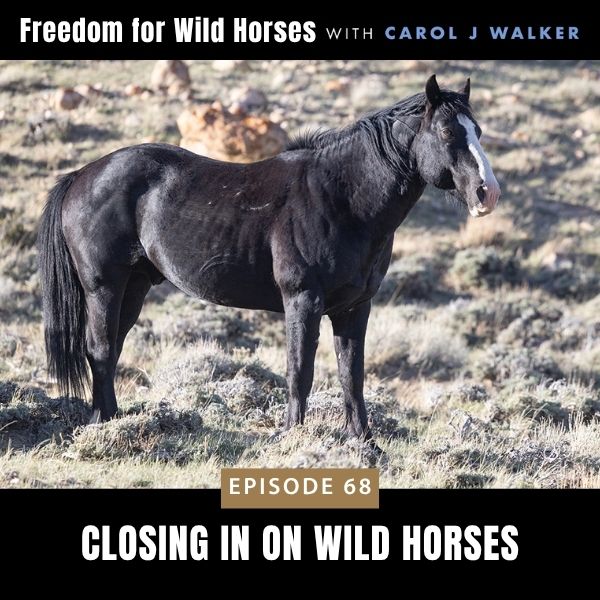
What happens when the people shaping public lands policy are closely tied to the very industries competing with wild horses for those lands? In this episode, I look at the growing influence of grazing and extractive interests on public land policy, and why these changes could have serious consequences for America’s wild horses.
I explain how proposed grazing changes could reduce public oversight, weaken protections for land health, and prioritize livestock grazing above wildlife conservation. I also discuss the expanding sale authority program for wild horses, the increase in online sales and transport to states with nearby slaughter auctions, and why many advocates are deeply concerned about where these policies are heading.
You’ll hear why these developments matter right now, how Project 2025 connects to current policy changes, and what actions you can take to speak up for wild horses. I also outline why contacting senators and representatives is so important as Congress considers the fiscal year 2027 budget and ongoing public lands policies.
Subscribe to my blog to get more information on how you can help America’s wild horses.
What You’ll Learn from this Episode:
- How proposed grazing rule changes could reduce public oversight of grazing policies.
- Why grazing interests continue to shape wild horse management decisions on public lands.
- What the expanded sale authority program means for wild horses in holding facilities.
- Why advocates are concerned about online sales and transport to states with nearby slaughter auctions.
- How Project 2025 connects to current wild horse policy discussions.
- Why the fiscal year 2027 budget is so important for wild horse protections.
- What actions you can take to contact Congress and speak up for wild horses.
Listen to the Full Episode:
Featured on the Show:
- Subscribe to my blog to get more information on how you can help America’s wild horses.
- Follow along on Facebook and Instagram!
- Living Images by Carol Walker
- Follow my blog to get updates: Wild Hoofbeats Blog
- Learn more about my book, Wild Hoofbeats: America’s Vanishing Wild Horses by Carol Walker
Episodes Related to Closing in on Wild Horses:
- Ep #64: Why BLM’s Expansion of Sales Threatens Wild Horses with Debbie Coffey
- Ep #65: A Year for Wild Horses
- Ep #67: Planning for the Red Desert Complex Wild Horses Needs Your Comments
Welcome to the Freedom For Wild Horses podcast, the place to find out about wild horses in the American West and what you can do to help them stay wild and free. If you love wildlife, wild horses, and the freedom that they stand for, this show is for you. I’m your host, Carol Walker. Let’s get started.
With the BLM (Bureau of Land Management) Director, Steve Pierce, nearing confirmation by Congress, we cannot forget that while in Congress, he advocated for the selling off of public lands to pay down the deficit and reduce spending. Our wild horses in this country reside on public lands, which have been managed for “multiple use,” but there is a movement right now by the administration to pander to extractive and grazing interests.
Earlier this month, Interior Secretary Doug Burgum canceled seven livestock grazing allotments in Montana for bison being used by the American Prairie Reserve, supporting conservation of this bison herd. I guess grazing permits are now to be used for livestock only.
Currently, there is a comment period until July 13, 2026, for a new proposed grazing role that would no longer allow input from the public on grazing leases and policies. It would also weaken BLM oversight of grazing and its impacts, and it would redefine grazing to exclude all animals except cattle and sheep who are being raised for food.
At the center of an increasing scandal over ethics violations and conflicts of interest is Interior Department’s Associate Deputy Secretary, Karen Budd-Falen. The Campaign for Accountability, which is a government watchdog group, sent last weekend letters to the House and to the Senate asking for congressional investigations into Budd-Falen for ethics violations. She’s a longtime rancher and attorney with her and her family having major financial holdings in many western ranches in Wyoming and Nevada, including grazing lease permits on BLM land.
During Trump’s first term, she was banned because of conflicts of interest from working on anything to do with grazing policy. But now, in his second term, she has returned to the Department of the Interior. She’s been working on grazing policy, as well as being involved to the changes to the National Environmental Policy Act, or NEPA, regulations.
At the end of 2025, in a video conversation with Wyoming Senator Cynthia Lummis, Budd-Falen said, “There are around 1,300 vacant allotments for the Bureau of Land Management right now. By the end of next year, every single vacant allotment will be filled by a rancher who will be able to get their cattle in there grazed. We’ve added some categorical exclusions so that if you have places like in northern Nevada, where my father-in-law’s place is, we added categorical exclusions so you can move cattle in there temporarily. Get some of this grass grazed off that will also really help the wildfire situation.”
There is no concern about standards for land health or wildlife or wild horses, but only a rabid desire to derive the absolute most use for grazing on our public lands. And then she goes on to talk about wild horses, quote:
“And we are also gutsy enough to take on the wild horses and burros. We’re taking revision of the Wild Horse and Burro regulations. I know we’ve got the sideboards that we’ve got from Congress. We’re going to live within the sideboards. David Bernhardt’s trained me that you got to live with the statutes you got. But there’s a lot more wiggle room than we’ve been able to do, and we’re going to take that on.”
Of course, in Project 2025, we were warned that the intention was to remove the guardrail against slaughtering healthy wild horses or selling them to slaughter, which has been banned in every interior appropriations bill for many years.
Budd-Falen again, “You can sell horses in the east. People want to buy wild horses there, but we don’t spend the money to transport the horses from California or Nevada or Wyoming to the eastern states where people will buy them, which is a perfectly legal thing to do. We’ve got our spending priorities all mixed up. We’d rather just put them in short-term holding and feed them hay for the rest of their lives. Look at the numbers. It’s not that hard. So let’s send them someplace where somebody wants to buy them.”
This is exactly what has happened this year with the BLM expanding its sale authority program. Now, instead of being able to purchase four horses per year per person who are over 10 or who have failed to be adopted three times, which is the definition of sale authority, each person can now purchase four horses every six months and can apply to purchase even more. The BLM has ramped up its online sales to now hundreds of horses being offered for sale and adoption through its online corral every month.
They are shipping thousands of horses around the country to sale and adoption events in Pennsylvania, Oklahoma, Texas, Mississippi, and Tennessee, where there are kill pens nearby, and it’s been documented that horses purchased are sometimes taken the same day to slaughter auctions.
How can you make room in the holding corrals so that more and more horses can be rounded up and removed from their homes on public lands? Sell them quickly, for now, or slaughter them. And that is the long-term plan.
The BLM is planning to round up and remove over 14,000 wild horses in 2026, even though there are over 58,000 wild horses in holding facilities at this time. Plans are in the works for a new grazing rule, now open to public comment until July 13, 2026. The livestock lobby is the biggest reason for wild horse roundups.
Under this administration, wild horses are the very last thing of importance in the use of our public lands. In fact, the President’s fiscal year 2027 budget does not have the prohibition against killing wild horses and burros or selling them for commercial slaughter. And this is the second time in a row that this was omitted. This was corrected in the fiscal year 2026 budget, but has not yet had the prohibition added for 2027.
So now is the time to speak up to your senators and representatives to ask them that the prohibition against killing wild horses or selling them for commercial slaughter be prohibited in the fiscal year 2027 budget. And then to ask for a congressional investigation of Karen Budd-Falen and ask for her removal from the Department of the Interior.
Thank you for listening to this episode of Freedom for Wild Horses.
Thank you for listening to this episode of Freedom for Wild Horses. If you want to learn more, follow me at www.wildhoofbeats.com for more information and for ways to help America’s wild horses. See you next time.
Enjoy the Show?
- Don’t miss an episode, follow the podcast on Apple Podcasts, Spotify or RSS.
- Leave us a review in Apple Podcasts.