
BLM Opens the Door to Slaughtering Wild Horses Even Wider
January 18, 2026
Ep #65: A Year for Wild Horses
February 16, 2026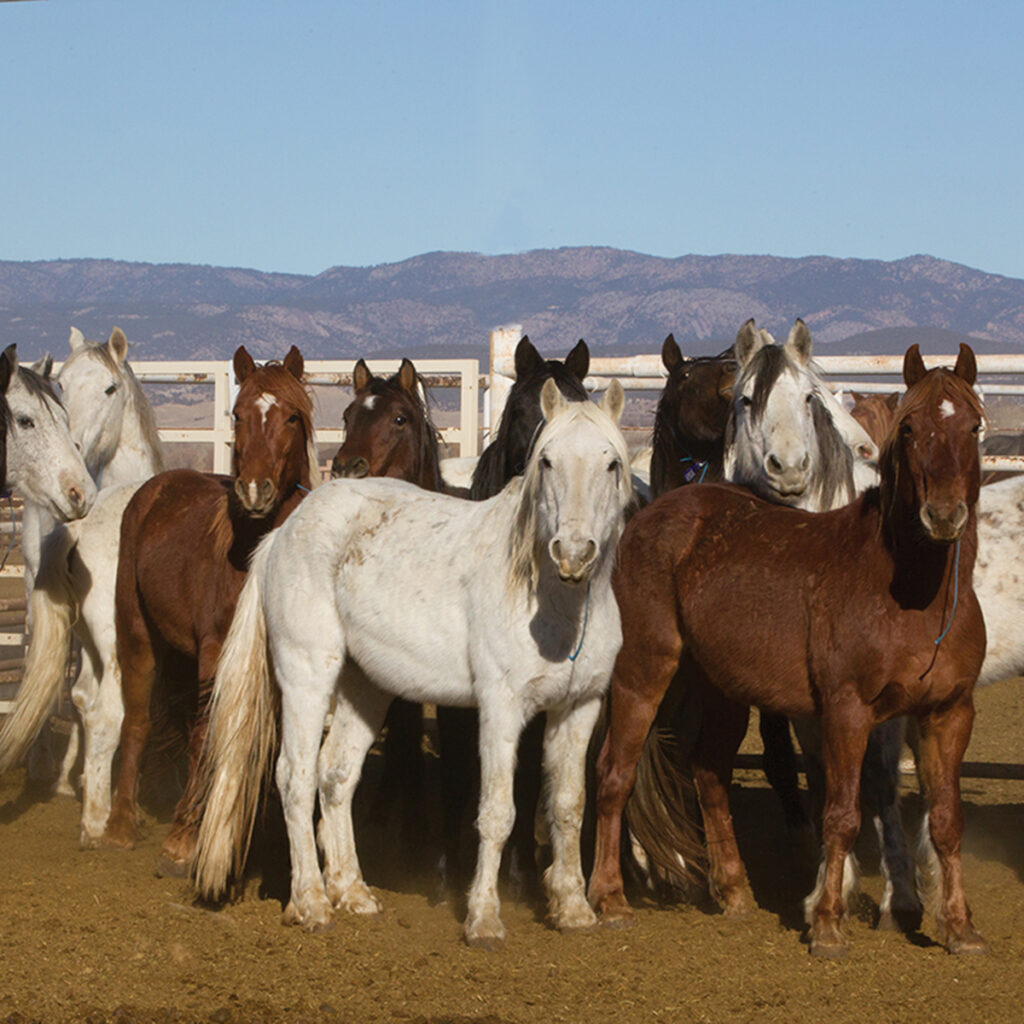
What happens to wild horses once they are removed from public lands and placed in holding facilities? In this episode, I examine a new Bureau of Land Management policy that expands the use of sales as a way to reduce the number of wild horses in government care, raising serious concerns about oversight and protection.
I’m joined by longtime wild horse advocate and Freedom of Information Act expert Debbie Coffey to explain what this policy change allows and why it matters. We discuss how increased reliance on sales, especially group sales, creates risks when transparency is limited and public access to information continues to decline.
We also outline why advocates view this shift as a direct threat to wild horses belonging to the American public and what listeners can do in response. This episode focuses on the importance of accountability and the specific actions needed to push back against policies that put wild horses at risk.
Subscribe to my blog to get more information on how you can help America’s wild horses.
What You’ll Learn from this Episode:
- Why curly horses disappeared from public adoption lists after recent roundups.
- Why the BLM’s expanded sales policy is raising alarm.
- How sales differ from adoptions and why that distinction matters.
- What past sales cases reveal about risks to wild horses.
- How reduced transparency affects public oversight.
- Why Freedom of Information Act requests play a critical role.
- What steps you can take to speak up for wild horses.
Listen to the Full Episode:
Featured on the Show:
- Subscribe to my blog to get more information on how you can help America’s wild horses.
- Follow along on Facebook and Instagram!
- Living Images by Carol Walker
- Follow my blog to get updates: Wild Hoofbeats Blog
- Learn more about my book, Wild Hoofbeats: America’s Vanishing Wild Horses by Carol Walker
- American Wild Horse Conservation
Episodes Related to BLM Sales:
- Ep #20: The Freedom of Information Act: Interview with Debbie Coffey
- Ep #52: What Project 2025 Means for Wild Horses: Interview with Debbie Coffey
- Ep #61: The Lost Horses: It’s Time to Pass the SAFE Act
Welcome to the Freedom For Wild Horses podcast, the place to find out about wild horses in the American West and what you can do to help them stay wild and free. If you love wildlife, wild horses, and the freedom that they stand for, this show is for you. I’m your host, Carol Walker. Let’s get started.
Carol: I am absolutely delighted to have my good friend Deb Coffey on with me today. She has done more for wild horses behind the scenes than anybody will ever know. And she’s also the Freedom of Information Act queen, knowing the most about that of anybody I know. And she continues to work tirelessly for the horses. And so I’m really happy to have her input on this really important issue today. So thanks for coming here, Deb.
Deb: Oh, sure, Carol. I’m always happy to be on the show. I admire you and the work you continuously do, your blog, and keeping up with everything. So on behalf of everybody, I’m thanking you for that.
Carol: Oh, thanks, Deb. And we really wanted to talk about this new press release from the BLM about their change in policy about sale authority horses because it’s very, very important.
Deb: Yeah. I’ll kick this off talking about my opinion, Carol. With the BLM now highlighting sales, highlighting means the BLM is going to focus and push sales. And this is really concerning for many reasons. And we’ll get up that they’re about they’re not being follow-up on their care or welfare. But for me, because I’ve filed so many Freedom of Information Act requests about the disposition of wild horses over the years, the sales of five-plus that only need an approval.
You know, so somebody sends in a thing, it gets approved, and we won’t know where these horses are going or how many horses are going, where they’re going, unless we file Freedom of Information Act to get a copy of those records. And I can tell you it’s becoming increasingly difficult to get any Freedom of Information Act requests. It takes probably a year to get, it’s just we won’t know where they’re going.
Carol: Oh, so let’s start, Deb, by telling people basically what the BLM announced. So basically, the BLM is offering opportunities for qualified buyers to purchase wild horses and burros, including options for purchasing larger groups. And they’re saying that now individuals and organizations may purchase up to four animals every six months. It used to be every 12 months. And they also offer an application process to purchase groups larger than four. And that is a big change.
Deb: And what this means, remember a long time ago, I filed Freedom of Information Act requests and found out they were thinking of, really not just thinking about, they were heavily in planning sending wild horses to Russia where they’d be used as prey for Siberian tigers, and also sending them to Ghana and areas where they would not be safe. What my fear is going to happen with these group sales, there’ll be some middleman with the organization. That kind of was a red flag to me because when they’re selling a group to an organization, it’s just a middleman that’s used to dispose of the wild horses and burros.
And I was thinking back, why is it that when a wild horse or burro is sold, it becomes private property? Once they’re freeze-marked, they should be wild horses and burros for the rest of their life. It’s BLM’s policy not to look after them anymore after that. Even if they’re sold, they could make some stipulation. I don’t understand the legal thing, but they’re abdicating their responsibility when they sell wild horses and burros.
Carol: Yes. We all knew that when Project 2025 came out, and they talked about disposing, basically, of the wild horses in holding, we knew that it was going to get really ugly. And just because Congress just passed the budget for the Department of Interior, it says it precludes the slaughter of wild horses.
So there’s no accident that right after that, the BLM issues this new press release because this is how they’re going to get rid of the horses in holding.
Deb: Oh, yeah. And basically, they only have a quote, unquote “certification of intent” to provide humane care on. That’s what the people promise when they send these applications in. So I’m some organization. I could then sell these horses to another organization or to another, they could sell it to another organization. They do not know where these horses, what will happen after that.
Carol: No. And there’s no penalty if people find them at auctions being purchased for slaughter. There’s no penalty.
Deb: Yeah, there’s nothing BLM can do after that point. Once they become private property, when they’re sold, they become private property. And you think they can do anything in other countries? They can’t even do anything here. You think what if our horses get sent, who knows where, and they’re tortured? Who knows what’s going to happen to them?
Carol: And look what happened with the AIP. So the adoption incentive program, there were people who were completely making use of this. They were giving $1,000 for people to take a horse. And people were abusing it. There was one family that made $52,000 selling these horses, turning around and selling them to slaughter afterward. And they were making money. And did they even preclude these people who were proven to have dumped the horses at slaughter from getting more horses? No. They don’t care what happens to the horses.
Deb: No. And these people belong to the American people. They don’t belong to the Bureau of Land Management. They belong to the American people. They belong to you and me and all of you that are listening. So I think it should be a stipulation that the BLM before they sell a group of horses, make it public who they’re selling them to online. They can do a press release and they can announce in next month, we’re planning on selling these horses and get public comment on it. So that we have any concerns, they certainly don’t look into who they’re selling it to, or they don’t care. But that way, if the public has any concerns, we can let them know.
So there should be a stipulation if they’re going to do group sales. It’s not hidden, and only a couple people know about it, and certainly not the public, but they should announce, okay, next month we’re planning on selling 60 horses to this organization for this purpose. If we’re going to be sending them somewhere. So that’s the bare minimum that they should do, in my opinion.
People need to see this as a total abdication of their responsibilities, caring for the welfare of the horses, and it’s also in violation of the act as far as I’m concerned.
Carol: Right. Well, they’re still doing adoptions, but what also is happening is they are doing less and less in-person adoptions and more and more online adoptions. And they have been loading these online adoptions with 1,000 or more horses at a time. And the horses that do not get adopted, they get a strike against them. So after three strikes, even a young horse becomes a sale authority horse.
So this is a great way to turn these horses that are not eligible for sale into horses that are eligible for sale. And this is happening more and more. And there’s no way that there are 1,000 people at the online adoption who are going to take 1,000 horses. It’s just not going to happen. So these horses just get lined up to be turned into sale authority horses.
Deb: Well, and the BLM has created this problem because they put all the horses on private property where the public cannot go and see them. If you go, generally, the horses have a tag around their neck, and you can see the last four numbers of the freeze mark. So if you wanted to adopt a horse, but you can’t go to Indian Lakes Road, you can’t go to a lot of these private facilities.
Carol: You can’t go to Wheatland. You can’t go to Axtell. These are the places the Wyoming horses are going to. You can’t go to these places and get horses.
The Wheatland facility pulls out 20 horses out of their maybe 2,500 in their whole facility and puts them in corrals outside the facility and says, “These are the ones you can take.” And the other 2,560 horses, you can’t even get access to. And they have only so many adoptions a year. And that’s the only access that you get to that facility. Axtell may have a two-hour tour once a year. A lot of these facilities don’t even have a tour once a year.
And so the public doesn’t see the condition of the horses. They’re not able to adopt them. It’s completely wrapped up. It’s like, “Okay, that’s our contract with our private contractor.”
Deb: And I’ve seen the contracts. They cannot answer questions, the contractors not allowed to answer questions. The public might ask. So if you drove by one of these places and you see the contractor, he can’t talk to you. They have to let him know if anyone wants to request seeing the horses. This whole wild horse and burrow program has lacked transparency, putting them on private property where you can’t see them. This is like taking your wallet out of your purse and saying, “We’ll take care of this for you. Don’t worry,” and you never see it again. You know? They’re stealing something from the public that you own.
Carol: The budget, $100 million a year to pay for these horses in holding. Of course, they’re going to say this is too expensive, we need to get rid of these horses. Of course, they’re going to say that. And the press release, they say that there is 63,000 horses in holding facilities right now. And Deb and I were talking about how you used to be able to go online on the BLM website and see from month to month how many horses were at each facility. But somehow that’s gone now.
Deb: Well, it’s not gone. They only show one month. And right now it’s the November 2025. So for the past two months, we didn’t get a December report up. But they used to show the rest of the year. So you could scroll down and say, okay, this was this month. Now they only have one month up there. So they’re becoming less transparent that way.
Carol: They don’t want us to see the change. I mean, especially if they start doing these big group sales. They’re not going to want people to see, “Oh, gee, somehow there’s 5,000 less horses in holding facilities this month.”
Deb: Mhm. That’s exactly it. Why else? They’ve done this for 15 years. Why all of a sudden do you only get one month of off-range facility reports on the Wild Horse and Burro, I think it’s on their data section or whatever. You have to, you have to kind of look to find it. But being less transparent, this has been an ongoing theme. You used to be able to see a for each BLM field office, you could look at a directory and see who their wild horse and burrow specialist was.
Carol: Hah.
Deb: You don’t know who anybody is at any field office.
Carol: And there’s no phone numbers on half, on half of the things.
Deb: Oh, no phone numbers or emails. You get the field office manager and that’s it.
Carol: And the main office phone number, and that’s it. That’s all you get. And there used to be, was it 2015 that they started taking down everything off the websites. You used to be able to go and look on the websites and find out about a particular herd management area. There were maps, there was information about the horses. All that was has been mostly taken down. And so it’s horrifying how little access to information we have these days.
Deb: And I’ve filed many FOIA requests on my own. I’ve helped other people, I’ve helped other organizations file FOIA requests. I’ve worked on appeals. I’ve worked on lawsuits. It’s so hard to get any information from the BLM. You almost have to file a lawsuit. They’ll just let it languish for years. And it’s become harder. You have to narrow the scope of your request so much. So it’s very hard to get information from the Bureau of Land Management.
Carol: So I thought we might talk a little bit about Tom Davis, Deb.
Deb: Oh yeah.
Carol: Between 2009 and 2012, Tom Davis took 1,700 horses from holding facilities. He arranged it through Washington, D. C., and Sally Spencer. And those horses, somehow, they just disappeared.
Deb: Yep. They went to slaughter. So there was a big investigation, and that’s why the BLM came up with their new applications that you couldn’t buy. This was supposed to be, there was so much public outcry. That’s how they came up with this plan. Okay, we won’t sell more than four horses at a time, or they have to get approval. But now that I see that they’re pushing sales to organizations,
Carol: More than four horses, for sure.
Deb: Yeah, five-plus. This is very concerning. This is what we need to really focus on, everybody.
Carol: Everybody. We do not want thousands and thousands of horses going to slaughter because of this.
Deb: Or being sent overseas to horrible conditions.
Carol: Exactly. And it’s almost like it’s revenge for the AIP being stopped. It’s like, okay, you’re going to stop us from paying people to take horses. Okay, we’re just going to let anybody take a horse or more than one horse or more than four horses. We’re going to try to empty the corrals as much as possible.
Deb: I think if anyone lives near corrals, please drive by and see what you can see. As you know, we did an investigation when I was with, Carol and I were with the Wild Horse Freedom Federation. I actually went to Oklahoma, Kansas, and in Oklahoma, you can actually, there’s public roads that drive through these off-range pastures. And one of them in Oklahoma, it was a residential section, part of the map. And most of them, we didn’t even see a third of the horses that were supposed to be there. We felt like crying the whole time. It was really sad.
So we don’t even know if all these horses are still there and haven’t already been… They don’t give public tours of these places, or if they do, it’s only two places a year. The BLM has just been horrible about transparency. And then they’re wondering why the advocates don’t seem to trust them.
Carol: Right. Can’t imagine why that would be.
Deb: One thing I wanted to bring up, Carol, about the adoptions and why they’re pushing sales, in the over 50 years, the BLM has had this program. To my knowledge, not once have they ever used a wild horse and burro training expert to make a video to show potential adoptees or people that have just adopted a wild horse how to gentle the horse.
Carol: Well, yeah. And the adoption program, a significant portion of the adoption program should have been aftercare support. “Okay, you’re having this issue with a horse. Let’s hook you up with somebody who can help you with this.”
When we were talking about the AIP getting taken away, it’s like, you can give people benefits that aren’t money. How about giving people vouchers for vet care? How about giving people vouchers for training? Something that will help support the horse, support the adoption, not just get rid of the horse.
Deb: Yeah. To me, it’s very clear. They just want to dispose of these horses. They want to empty out the corrals. They can’t do a mass euthanasia without everyone having a major hissy. But this is a second step below that. This is a step right below that.
Carol: Well, they can’t, they can’t do it without going against Congress, but a lot of things are being done against Congress anyway. But the easy way to do this is to just empty the corals by giving them to a person who might turn around and take them to auction for slaughter.
Deb: Yeah, and worse yet, organizations that will ship them overseas or wherever.
Carol: Yes. So I don’t anticipate this being a boon for wild horses. I anticipate this as being a horrible thing for wild horses. And as you know, and I had spoken about this before, they also have been closing down the prison training programs. They have gotten rid of the contracts for all the prison training programs. They haven’t renewed any of them. And so those facilities have been emptying out.
Deb: Had they had a Wild Horse and Burro Advisory Board meeting in the last year?
Carol: I think they have. I think they’ve had one. Yeah.
Deb: Okay, their minutes aren’t online yet for that.
Carol: But nothing about what’s going on right now.
Deb: That’s what I mean. Coincidentally, there’s no meeting and no minutes about this to look into it.
Carol: There haven’t been any roundups recently either, which is different. Since the shutdown, usually wintertime is when they’re rounding up wild horses, and there hasn’t been anything. And we’re still waiting for the 2026 roundup schedule. That has not come out yet. So we don’t really know what they’re planning, and it’s a really creepy feeling waiting.
Deb: Mhm. I think we’re going to have to, everybody’s going to have to stay really…
Carol: Vigilant.
Deb: Yeah, vigilant.
Carol: And of course, it’s always a good idea to speak to your members of Congress and tell them that you want the horses to continue to live on public lands, to be managed on public lands, and that you don’t want them slaughtered. You don’t want them shipped overseas. You don’t want them sold en masse because that is a recipe for abuse. So that’s always a very good idea to do.
Deb: And it’s what’s needed, not just a good idea. They really need it now. They need your voice. Take a couple minutes this coming next week and make a phone call.
Carol: Yep, to your senators and representatives. This year could be a very crucial one, and I don’t want to find out that in March, there’s only 50,000 horses left in the holding facilities because a lot of them have, thousands of them have been shipped. It’s not to their benefit.
Deb: And for any of you doing research out there, information tends to disappear. The BLM takes it offline or whatever. So if you see something important, print it up, please. Take a screenshot or print it up so that somebody has a record of it. Because you never know. Like now, I’m so glad that I printed up and saved all the old facility reports for years, because if anyone ever has a FOIA lawsuit or any other lawsuit, some of these records could be very helpful.
Carol: Every FOIA that’s been filed is available for people to view as well. Correct, Deb?
Deb: Yes. Anyone can request a copy of any FOIA number. You just say you want to copy the responsive records for this FOIA. You can go to an online, the BLM FOIA log and look at what people have requested and see the FOIA number. So you can always get any records you’re interested in, or contact groups. You can contact me or American Wild Horse Conservation or somebody may have or know of who might have some FOIA records, and they might be willing to share it with you for your research purposes.
Carol: Exactly. Exactly. People always ask me, “Well, what would you do with all these horses in holding?” Well, there were 22 million acres that were taken away from wild horses since 1971. I would like to see them back out on our public lands.
Deb: Yeah, I would too.
Carol: The stallions have been gelded. So it’s not going to be a breeding population and put into these areas where they can live out their lives. That’s what I would like to see for these. I don’t want the corrals and the holding facilities to get filled up again with more horses rounded up because they’ve been emptied. I don’t want to see that either. So we need to, have a stop to the roundups, and we need to put these horses back out on public lands to live out their lives.
Deb: I agree with you, Carol. I think that they took away land at herd management areas. They shouldn’t have been removing them in the first place. They’ve favored the grazing of privately owned livestock. It’s such a corrupt thing that they’ve done and abdicated their responsibility for caring for wild horses on public lands.
And that was the whole crux of the issue with them removing them. They took away that land the horses were on. So they’ve basically violated the act from the beginning of this. They didn’t even do a census for a couple of years after the act was passed. So they’ve basically been violating this the entire time it’s been in effect. And this is coming to a culmination now. “Oh, we can’t afford the horses.” Yeah, for 55 years of terrible management.
Carol: Right. And their primary purpose is to manage and care for the horses, care for their welfare, not to abdicate responsibility and dump them. That’s not what the Bureau of Land Management is supposed to be doing with our wild horses.
And that’s not what any of us want to have happen to these 63,000 horses that are in holding.
Deb: Yeah. So Carol and I are asking you to call your representatives, your senators and representatives, and tell them you’re very concerned with BLM’s new policy on highlighting sales of wild horses, especially the groups, large numbers to organizations or people, and Carol, you want them protected.
Carol: Yeah, we want them protected. So yeah, I think that was basically it for today. And Deb, thank you so much. You have such a wealth of knowledge, and it’s so valuable to help our horses. I appreciate everybody listening today.
Deb: Thanks, everyone.
Carol: Thank you for listening to this episode of Freedom for Wild Horses. If you want to learn more, follow me at www.wildhoofbeats.com for more information and for ways to help America’s wild horses. See you next time.
Enjoy the Show?
- Don’t miss an episode, follow the podcast on Apple Podcasts, Spotify or RSS.
- Leave us a review in Apple Podcasts.
3 Comments
Carole & Deb – WHE had this information a week? or so ago – Nothing’s changed, has it?
Yes this administration definitely would love to do this even more so with P-2025. But none of our
politicians – other than a very few – have EVER stepped up & made the effort to change things.
Schumer & Gillibrand (my senators) might reply – but if so – its the BLM propaganda – nothing more.
Maybe because the two of them are East Coast elite – who the hell knows!
I realize you both are making every attempt to make a difference.
I will write more “”comments””. And comment at the BLM.
Keep up the good work
Maggie
Carole & Deb – WHE had this information a week? or so ago – Nothing’s changed, has it?
Yes this administration definitely would love to do this even more so with P-2025. But none of our
politicians – other than a very few – have EVER stepped up & made the effort to change things.
Schumer & Gillibrand (my senators) might reply – but if so – its the BLM propaganda – nothing more.
Maybe because the two of them are East Coast elite – who the hell knows!
I realize you both are making every attempt to make a difference.
I will write more “”comments””. And comment at the BLM.
Keep up the good work
Maggie
Sorry for the double post! Dont know how that happened!