
Ep #73: Saying Goodbye and Anticipating the Roundup
October 19, 2026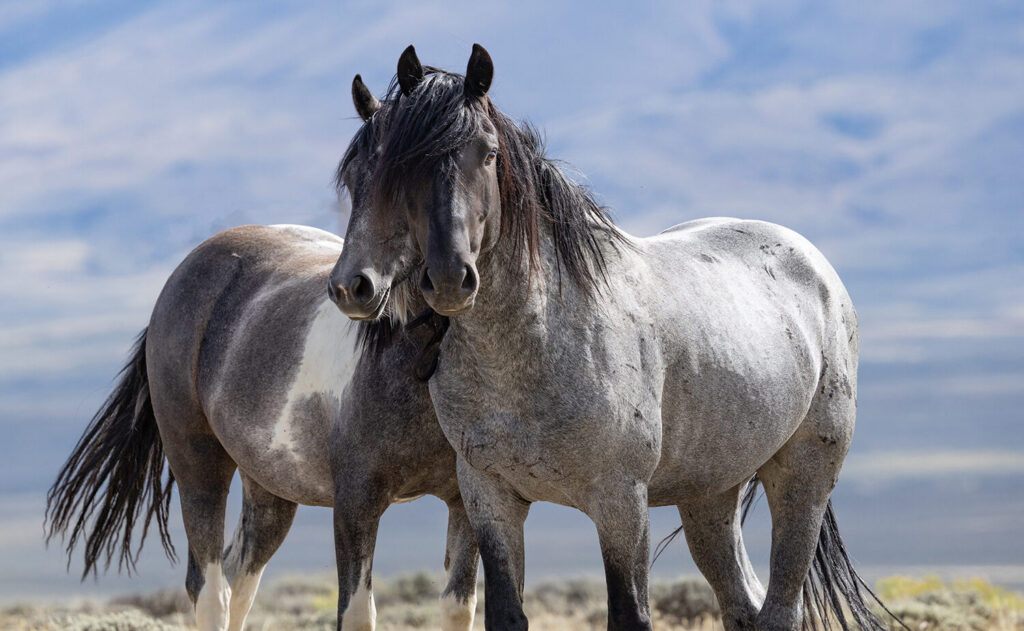
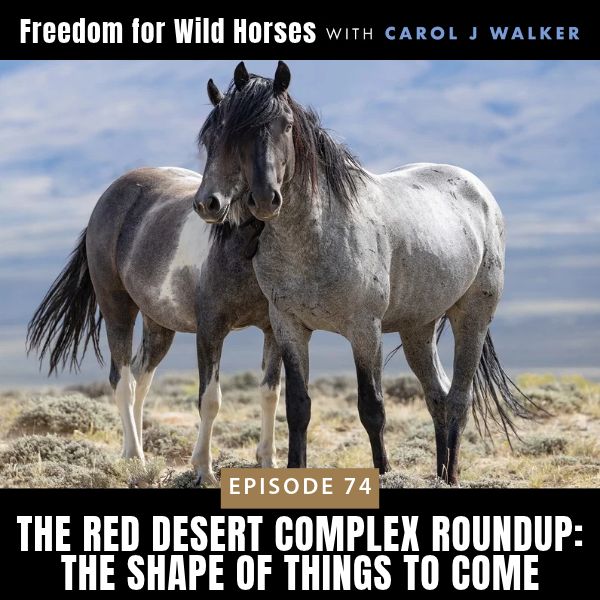
Have you wondered how wild horse roundups have changed in the last year? In this episode, I take you inside the Red Desert Complex roundup in Wyoming and share what I saw, from limited public observation to changes in how the horses were handled and where they were taken.
The BLM changed its plans shortly before the roundup, reducing the number of horses to be captured and making other significant changes to how the roundup would be conducted. The horses were also sent to a private holding facility with no public access, and a veterinarian was no longer required to be on site during the roundup.
I share what I observed during the roundup, including the condition of the horses, the deaths that occurred, and the removal of horses that I had come to know over the years. I also explain why these changes matter beyond the Red Desert Complex and why the way these roundups are being conducted could have serious consequences for wild horses in the future.
Subscribe to my blog to get more information on how you can help America’s wild horses.
What You’ll Learn from this Episode:
- How the BLM changed its plans for the Red Desert Complex roundup shortly before it began.
- Why public observation is important during wild horse roundups.
- What changed when a veterinarian was no longer required to be on site.
- What happened to the horses after they were captured and sent to holding.
- Why the use of GonaCon and the possible release of geldings raises concerns about the long-term health of the herds.
- The condition of the horses during the roundup.
- Why the changes seen during this roundup could represent a broader shift in how wild horse roundups are conducted.
Listen to the Full Episode:
Featured on the Show:
- Subscribe to my blog to get more information on how you can help America’s wild horses.
- Follow along on Facebook and Instagram!
- Living Images by Carol Walker
- Follow my blog to get updates: Wild Hoofbeats Blog
- Learn more about my book, Wild Hoofbeats: America’s Vanishing Wild Horses by Carol Walker
- The Red Desert Complex Gather Page
Episodes Related to The Red Desert Complex Roundup:
- Ep #37: Observing a Roundup
- Ep #62: Wild Horses: Where We Are Now and Remembering Where My Journey Began
- Ep #73: Saying Goodbye and Anticipating the Roundup
Welcome to the Freedom For Wild Horses podcast, the place to find out about wild horses in the American West and what you can do to help them stay wild and free. If you love wildlife, wild horses, and the freedom that they stand for, this show is for you. I’m your host, Carol Walker. Let’s get started.
The scoping document, announcing that there would be a Red Desert Complex roundup, came out in May this year. It was supposed to be about coming up with a plan for the complex. “Description of the project. Bureau of Land Management, Lander Field Office and Rollins Field Office. Rollins Field Office are preparing updates to Herd Management Area Plans, HMAP, for Antelope Hills, Crooks Mountain, Green Mountain, Lost Creek, and Stewart Creek, Herd Management Areas (HMA), referred to as the Red Desert Complex.
Existing herd evaluations for these areas are more than 30 years old and need revised. The field offices also intend to gather excess wild horses from the HMAs. Updates to the HMAPs will guide future management of the HMAs and the wild horses going forward. Current wild horse populations exceed the appropriate management level (AML) established for the HMAs. The current AML for the complex is 480 to 724. By the fall of 2026, there is projected to be approximately 2,300 adult horses and foals in the complex.”
I made a point of encouraging people to submit their comments. I gave them some talking points that I thought were important to mention, including about reinstating Arapaho Creek as a herd management area that is managed for wild horses. Given its crucial position in the middle of all five herd management areas and given its very important role in horses moving through it and staying in it, allowing the herds to survive even though the appropriate management levels for all the herds except Green Mountain are well below the numbers necessary to ensure genetic viability for the wild horses.
The BLM, instead of preparing a herd management area plan (HMAP) that took into consideration comments from the public about improving the range and reinstating herd management area status for Arapaho Creek, instead issued a roundup plan for the complex. They said that the horses were starving because of the drought, and they needed to mitigate the destructive impacts on the range. They rejected any consideration about Arapaho Creek. They made an estimate of the population of the complex, “2026 post-foaling estimate,” that there would be 2,278 wild horses in the whole complex, despite the fact that they are not supposed to include foals that haven’t even been born yet in their population estimates.
The decision was to remove 1,800 wild horses from the entire complex and then return 75 to 100 mares treated with birth control. And they initially said they were going to be using PZP 22 on the 2026 gather schedule.
The initial plan was that the BLM would start rounding up wild horses on October 1st and remove 1,800 wild horses from the whole complex. Then, two weeks before, the goal was suddenly changed to capturing 1,035 wild horses from only the Green Mountain and Stewart Creek Herd Management Areas, and 104 wild horses would be returned with mares now receiving GonaCon, which is a known sterilant.
Where were the horses going after being captured? Initially, they said Rock Springs, which is a BLM-owned holding facility. And this was good because we could see the horses from the overlook. And when they were processed, make appointments to adopt or purchase them. But that also changed. Now they were all going to go to the holding facility in Wheatland, Wyoming, that can hold 3,500 wild horses and that is privately owned with no public access.
I contacted the Wyoming Communications Office and told them the dates I was planning to come. The start date was changed from October 1st to October 15th. They told me, “Thank you for reaching out to the BLM Wyoming Communications team with your questions. At this time, we are not offering observation opportunities outside the October 15th to 18th public viewing window noted in the previous email.” Then October 15th was a setup day, so the public observation was only supposed to be three days total. This is for a roundup that was supposed to last three weeks.
I immediately called everyone I could think of, including the Cowboy State Daily, regarding this change to observation. In all the 22 years I have been observing roundups in Wyoming, I have never been told that I cannot observe. Wild Horse Education submitted a letter for access through their attorney. A couple of days later, I received a call from a BLM staff member in the communications department that this was a mistake, a misunderstanding, and that observation would be allowed until the end of the roundup, which was estimated to be about three weeks.
Why is public observation of roundups important? Bottom line, it is because the contractors who are in charge of the operations treat the horses better when people are watching. They run the horses slower. They’re more careful about how they set up the traps. And if an observer spots something that is going wrong, like foals left behind or a trap setup which runs horses through a fence, these things can be corrected. Plus, observers can see the condition of the horses once they come in when they visit temporary holding. Are they exhausted? Are the foals in poor condition, etc.? It’s also a time to get questions answered about the day’s operations, but not this time.
The public observers were allowed to go to temporary holding after the day’s operations had concluded only on the first three days. After that, we were told that the rancher whose private land the temporary holding was located upon was conducting cattle operations, so there would be no observers. This was outrageous. The BLM then offered to take photos of the horses in temporary holding and place the photos on their Flickr account. This was ridiculously insufficient.
The other major change to BLM policy that happened before the roundup began was to the Comprehensive Animal Welfare Program, CAWP. As of June 29th, a veterinarian was no longer required to be on site during the roundup. This means any treatment or diagnosis or euthanasia decisions would be made by a member of BLM staff, not a veterinarian. This change became relevant as the deaths started rolling in.
On the daily gather report on the Red Desert Complex webpage, they list how many captured and how many shipped each day, as well as injuries and deaths and causes of death. I put the link to this page on my Wild Hoofbeats website under this podcast. All of the 17 deaths listed are classed as pre-existing conditions, save one: a mare that had a seizure and died at temporary holding. This is convenient for the contractor whose statistics for deaths during the roundups are counted. It is peculiar that these horses with all of these problems made it running over rough terrain for miles, chased by a helicopter into a trap.
But the stuff hits the fan on October 19th when the BLM lists three cremellos who’ve been put down because of blindness. I had observed the two-year-old mare and the two foals at a distance through binoculars in Stewart Creek in August and had not noticed anything abnormal about them. But I’m not a veterinarian, and neither is any of the BLM staff making the decisions about living or dying for the wild horses at the trap site.
The BLM has a terrible history of putting down cremellos at roundups that had no vision problems, that advocates had observed for years in the wild, who now suddenly were listed as blind. My own youngest Mustang, Helios, a cremello pinto, was rounded up during the last Red Desert Complex roundup in 2020, and he’s not blind. And neither is my 20-year-old McCullough Peaks cremello Mustang. Cremellos tend to be more sensitive to the sun than brown-eyed horses, but that’s true of blue-eyed people too.
I am not saying that these horses were not blind. I was not there. I’m not a veterinarian, but a veterinarian should have been there. This is unconscionable that they were not. A total of eight horses that were captured during the roundup were put down because of blindness. This is far higher than any roundup I have ever been observing at. This needs to change immediately.
Another thing to note, that these supposed starving horses actually were rated four to five on the Henneke Body Scale, all of the horses at the roundup. And this is very good condition for horses. These are not starving horses. They were not rounded up because they were dying or they were going to die or that there was no forage available on the range.
The first day of my observation was at Green Mountain, just off the highway. We could not see the trap, only the horses running in at a far distance. There were cows in the area who ran from the helicopter. They were out at least a month past the date they were allotted in their lease. I was able to go back and forth to my vehicle. The second day I was out, we were again in Green Mountain in a different location, up an extremely steep and rocky and tall hillside that I really wasn’t sure I could climb, but in the end, I made it.
We waited for four hours in the howling wind on this hill with no shelter for the helicopter pilot to decide if he was going to proceed. We were closer to the trap, but it and the pens and the trucks were all safely tucked behind a hill, so we couldn’t see them. The next day was called for wind; no flying of the helicopter. Then they were going to go back to the site with the steep hill, and I told the communication staff member I could not do it again.
On Day 11, they moved to another location in Green Mountain with a much easier hill. We were on top of it and had a view of the trap area, but not the trap, that was very far away. And on the other side of the hill, we could see the helicopter running the horses.
In the afternoon, my attention was captured by a large family with a stunning, proud Palomino stallion. His bold markings were incredible, and his family included a red pinto foal and a look-alike Palomino pinto foal. They ran from the helicopter up and down steep hillsides, and the stallion was not having it. He even ran up our hill, and for a breathless moment, he was right beside me before charging down, covered in sweat but still defiant. He was one of the wildest sights I have ever seen. The helicopter chased them again and again, and they finally escaped, and the helicopter stopped to pursue another family.
I commented to the BLM staff with me how great it was that he escaped and that he clearly was not meant for captivity. And they were silent. We were then told to stay down, not stand up again, and to move our cars half a mile away, as if it were our fault that they got away.
The day ended about an hour later, and I was told it would be a different site tomorrow, which would be the last day. There were only 20 or so horses short of their goal of 1,035 wild horses to be captured.
Day 12 was another windy day, and I wondered if the helicopter would fly. We finally drove out near where our observation spot would be, and a gorgeous and dramatic sunrise colored the sky. There was some confusion about where we would be placed. And finally, we pulled off Crooks Gap Road and saw the trap area, over two miles away. The jute was easy to see, the wings that funnel the horses into the trap. If you were using binoculars, you could see things, but not the trap itself, once again.
I asked, wasn’t this Arapaho Creek? and was argued with. The first family that was driven by us close enough to recognize was a family I knew well, having spent time with them over the last three years and having just seen them in September. It was Silver’s family with gorgeous roans and pintos and sorrels. Somehow, they had been targeted. Then, a couple hours later, the last group of horses were driven in, a large family that I could not identify even using my long 800-millimeter lens because I was shooting into the sun and they were so far away.
Part of the family broke off and ran. The helicopter chased them into the trap and then went back to get the rest of the family. Shortly after this, we got the welcome word that the roundup was finally over. I drove home from there, and it wasn’t until I downloaded my images onto my computer and enlarged them that I recognized the gorgeous Palomino pinto stallion and his family. The helicopter had gone to a great deal of trouble to bring them from the location we had been at yesterday. It was a long way away, and they were no longer free.
I was told that 104 horses would be released in one or two months, that the communication staff member said they would email me, and I asked for as much notice as possible. The mares would be treated with GonaCon. I asked, what about the stallions to be released? Were they going to geld any of them? They had never gelded stallions in Wyoming before. The answer I received gave me chills: “Some of those released will be stallions; some will be geldings.”
My concern is that if they have removed below low AML for both herds, as they did in White Mountain in 2024, the herds may end up genetically compromised. The AML, appropriate management level, for Stewart Creek is 125 to 175, and the plan was to move to low AML, which is 125 wild horses. The AML for Green Mountain is 170 to 300. If they remove too many, and the 52 horses returned to each herd have mares treated with GonaCon, which usually sterilizes them, and geldings instead of stallions, this will totally jeopardize the health of these herds long term.
When I called this episode “The Shape of Things to Come,” I meant these are things the BLM is now doing in all the roundups going on right now: multi-year plans with no public input after the initial plan is released, gelding stallions, no veterinarian at the roundup, no or severely limited public observation at the roundup, no public access to temporary holding, using fertility control that sterilizes. Our wild horses deserve better. None of these things are acceptable. Contacting your senators and representatives is always the most useful thing you can do.
Thank you for listening to this episode of Freedom for Wild Horses.
Thank you for listening to this episode of Freedom for Wild Horses. If you want to learn more, follow me at www.wildhoofbeats.com for more information and for ways to help America’s wild horses. See you next time.
Enjoy the Show?
- Don’t miss an episode, follow the podcast on Apple Podcasts, Spotify or RSS.
- Leave us a review in Apple Podcasts.
1 Comment
Thanks so much for being there for the Red Desert wild horses! I know how difficult it must be to have to countenance what is happening to these ecologically harmonious and legally protected wild horses. The enormity of the injustice being done to them as well as to those of us who appreciate them is staggering. But we must persist to right the grievious wrong!