
The Destructive and False Propaganda in the BLM’s Plan to Roundup the Red Desert Complex Wild Horses
August 23, 2026
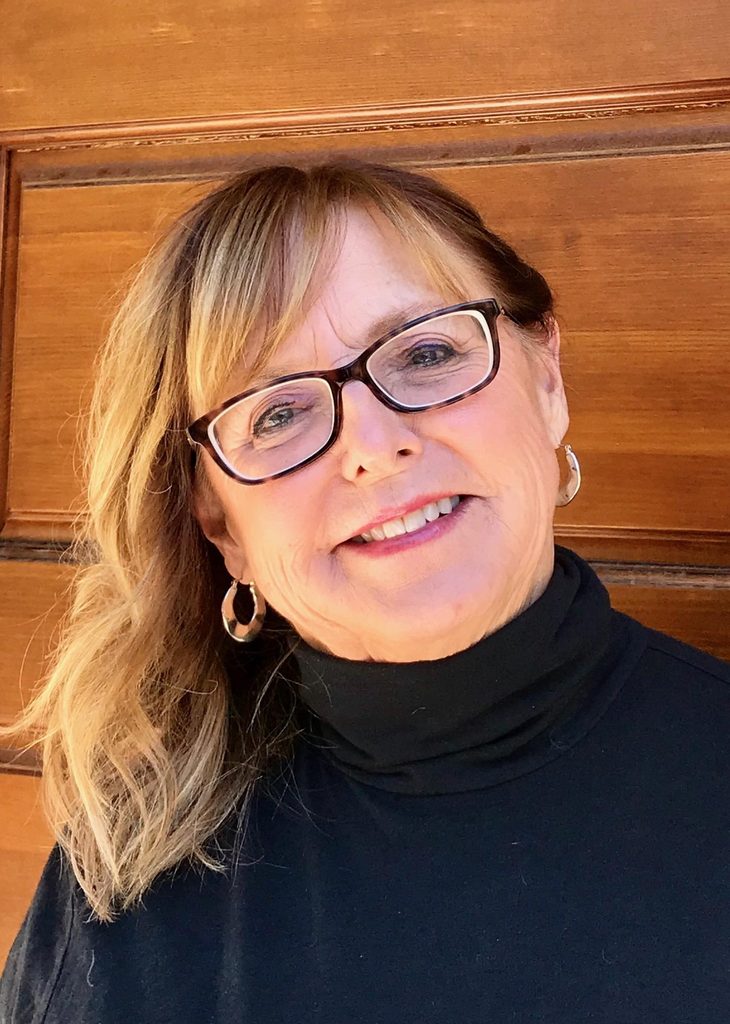
What can the story of Wild Horse Annie teach us about standing up for wild horses today? In this episode, I speak with award-winning author Terri Farley about her new book, Horse Girl: How Velma Bronn Johnston Became Wild Horse Annie and Outsmarted the Mustang Killers of the West. We talk about how Velma became an advocate for wild horses and the experiences that shaped her work.
Terri shares what she discovered while researching Velma’s personal papers, including stories that reveal the woman behind the name Wild Horse Annie. From her childhood and struggles with public speaking to the first time she witnessed horses being taken to slaughter, Velma persisted in speaking out even when it was difficult.
In this episode, you’ll hear why Terri believes Velma’s story is especially relevant today, what advocates can learn from her approach, and why facts, education, and the willingness to speak up remain so important. We also talk about wild horse family bonds, what people misunderstand about wild horses, and why Terri wants readers to rethink what they know about these animals.
Subscribe to my blog to get more information on how you can help America’s wild horses.
What You’ll Learn from this Episode:
- How Velma Bronn Johnston became Wild Horse Annie and began advocating for wild horses.
- What Terri discovered about Velma through her personal papers and research.
- Why Velma continued speaking out despite her discomfort with public speaking.
- The lessons Velma believed advocates needed to fight for what matters.
- Why facts and education are important tools for wild horse advocacy.
- What people can learn by observing the relationships within wild horse families.
- How Horse Girl connects the history of Wild Horse Annie’s advocacy with the challenges facing wild horses today.
Listen to the Full Episode:
Featured on the Show:
- Subscribe to my blog to get more information on how you can help America’s wild horses.
- Follow along on Facebook and Instagram!
- Living Images by Carol Walker
- Follow my blog to get updates: Wild Hoofbeats Blog
- Learn more about my book, Wild Hoofbeats: America’s Vanishing Wild Horses by Carol Walker
- Learn more about Terri Farley and her books: Website
Episodes Related to Terri Farley’s Book Horse Girl & Wild Horse Annie:
- Ep #53: Time Spent with Wild Horses
- Ep #62: Wild Horses: Where We Are Now and Remembering Where My Journey Began
- Ep #70: Wild Horses: What’s Real and What’s True
Welcome to the Freedom For Wild Horses podcast, the place to find out about wild horses in the American West and what you can do to help them stay wild and free. If you love wildlife, wild horses, and the freedom that they stand for, this show is for you. I’m your host, Carol Walker. Let’s get started.
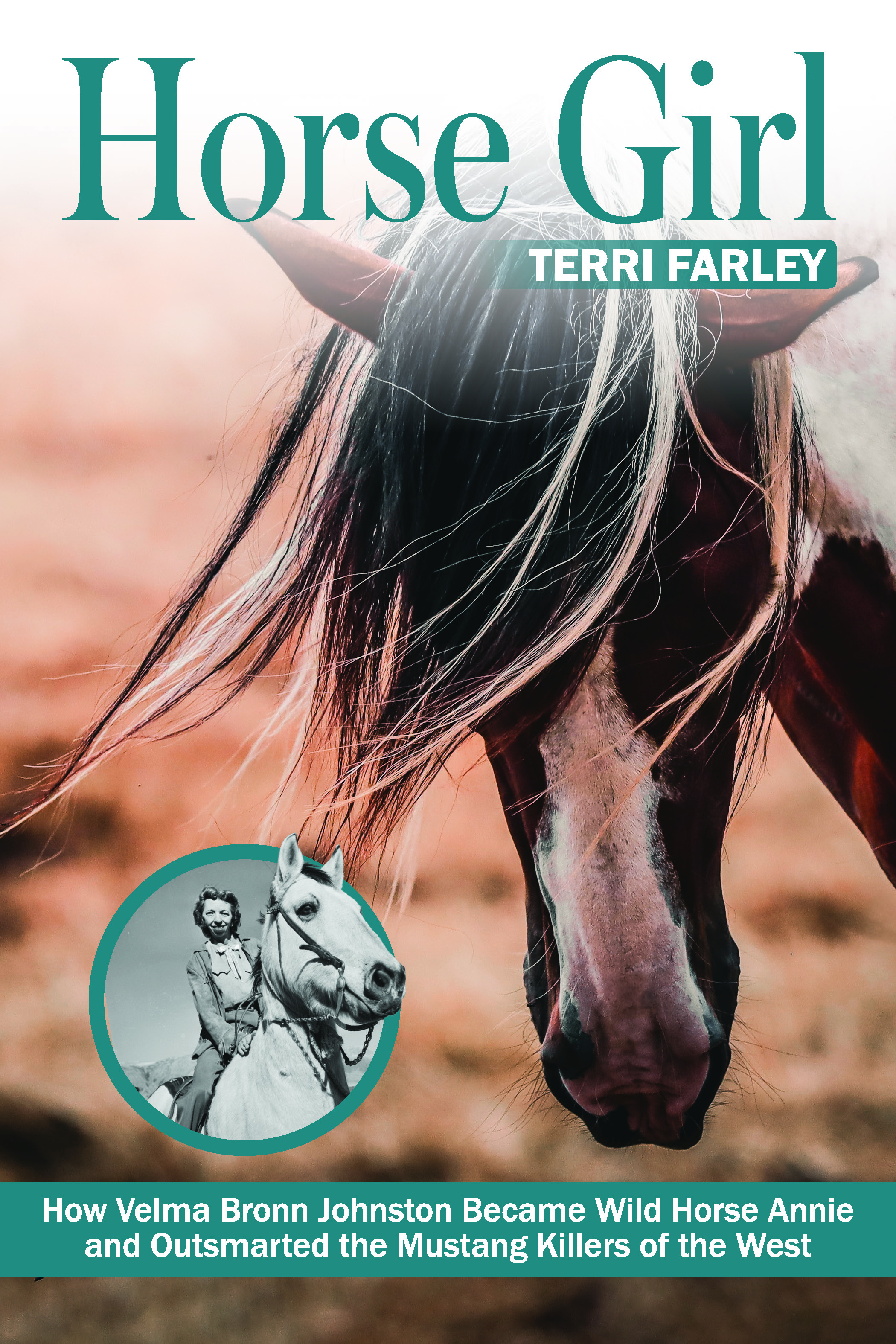
Today, I’m really excited to interview my friend Terri Farley. She is an award-winning author of many, many wonderful books, including the Phantom Stallion series and also Wild at Heart: Mustangs and the Young People Fighting to Save Them. But she has a new book that is coming out at the end of this month, and we’re going to talk about that. It is Horse Girl: How Velma Bronn Johnston Became Wild Horse Annie and Outsmarted the Mustang Killers of the West.
And it’s a fantastic book and a very timely book to read to get a sense of where all the advocacy work for wild horses got started. And we also have to think about the future. So thank you for being here, Terri. I really appreciate it.
Terri: Absolutely. I’m happy to be here.
Carol: That’s great. So tell me, why did you decide to do this book?
Terri: The roots of this book probably are not only in my childhood but in my teaching and advocacy. I mean, I’ve driven the marketing people crazy because I say it’s an all-ages book, but it really is, and I wrote it that way because so many of us want to stand up for wild horses or education or conservation, but we’re just embarrassed. I mean, we feel awkward when we go to meetings and speak out. We feel awkward on Zoom. We feel awkward, even though our hearts and our brains are full of outrage or information or both.
And Velma Johnston was a brilliant woman. I’ve been really lucky to get into her personal papers. Oh my gosh, a trip in the best way took me right through her life. She was born in a rural area. She was not born on a ranch, although that is the myth that most of us have fallen for, including me, and I have published that misinformation. She grew up in an area just outside of Reno, between the city of Reno and the University of Nevada. But they had a big lot, so they did have backyard horses, like many people. She got polio as a child.
And some people may not know because the aftereffects last, but polio itself doesn’t last that long. It’s usually days or weeks. But it affected the way she walked. It made her tilt slightly. She could still walk and run and ride. But when she was around 11 years old, her parents found out that there was a low-cost pilot program for kids with polio in San Francisco. So she lived in Nevada, but her parents took her to San Francisco because a lot of the programs that we hear about that are aqua therapy and things like that were for people with lots of money. Well, Velma’s family did not have lots of money.
They took her to San Francisco for this pilot program, left her there, because somebody had to go back and run their freighting business, which was called the Mustang Express, and take care of the other children in the family. Left her there. The treatment that they did was a cast. They put a cast on the part of her body that was affected by polio when she’d been younger. And so she was trapped in this cast, you know, sort of mummified. And she was alone. And she could hear other kids who had polio but were on crutches and weren’t in a cast, so could run around in the halls and stuff.
And all of her dreams of the wild horses that her father would catch and gentle and use for his freighting business, she thought about those mountains. She thought about the wild horses that lived up there. And she thought about having a real ranch, not just two horses in the backyard and looking up at the mountains that surround Reno.
The casting kind of worked. It did help her move better eventually. But what happened is that she was a 11-year-old girl. The rest of her body kept growing as the part that was in a cast stayed still. So this affected the way she looked. This affected the way her body tilted. Her shoulders tilted. Her father disowned her pretty much. I mean, he rarely spoke to her after this, and she had been his buddy in taming these horses in their backyard.
So my point in saying why did I write this book? Nevertheless, she persisted. When she found that wild horses were being slaughtered, she had settled into the ranch life. She was happily married. She had all the animals she’d ever wanted as an adult. She was driving to work in Reno from her ranch outside of town, and she got stuck behind a truck that had horses in the back that were bleeding and falling into each other and falling down and stepping on each other, dripping blood on the freeway.
She followed it to a slaughterhouse and learned from a kind of flippant guy that those horses were out there for the taking and you could just round them up and sell them for dog food and make a ton of money with no overhead. And she was horrified. And so she did start going to meetings. And she hated it. She hated when she stood up knowing that everyone was staring at her face and going, ” What’s wrong with her?”
But she did it. And she kept doing it. And even in the last days of her life, she knew that she was not a beautiful heroine for the horses, but, oh my gosh, she could stand up for them and speak out for them. And that’s what I want people to get from this book, to see it doesn’t matter what you look like. It doesn’t matter if your voice shakes when you’re speaking. You need to take what you do best and what you’ve learned about wild horses and the atrocities that are being committed upon them and speak out. It doesn’t matter what you look like. And I wanted kids to know that because it’s hard, and I wanted adults to know that too. Long answer, but that’s why.
Carol: No, that’s wonderful. I was struck, as I was reading it, how the BLM hasn’t changed. They’re still saying the horses are worthless. They’re starving to death. They have to be removed. They’re a plague on the land. I mean, it’s the same conversation as back then. It hasn’t changed a bit. And the livestock ranchers are still wanting to get all of the horses off of their land. And so in certain ways, things have not changed.
I mean, she changed so that we have laws protecting these horses. But the conversation is still the same, and the challenges are still the same. Wild horses are getting slaughtered now. So yes, it’s a very timely book because it’s really bringing the focus on really humane treatment of wild horses, humane treatment of any animals is so important.
Terri: And opening people’s eyes to what’s going on. I was delighted to see the New York Times article and people reacting to it on TikTok, on Instagram. You know, I got my haircut. People were talking about it there. This was not a rural barbershop. People can’t care if they don’t know. And that is one of the things that Velma realized early on. Because she had heard these small planes going over her ranch, and she vaguely knew what they were doing, but not really.
When Solari at BLM said, “Shoot, those horses are all over where you are,” which they weren’t. She had only seen them once or twice, but they were near her ranch. “You should get a permit. Actually, your husband should get a permit to round these horses up and just sell them. It’s the lazy man’s way to riches.” And today, I’m always amazed that people don’t know we still have wild horses and that they can go see them if they know.
Carol: It’s our land. It’s our land. These are our horses.
Terri: Our land, our horses. And they don’t know that. And so I think education, as it was in Velma’s day, boy, would she have gone crazy with the internet. Whew. She was in constant pain, and so she stayed up late. She drank coffee and wrote letters, letters, letters. And if you wrote to her, you, by golly, got a letter back.
And so she opened people’s eyes. And as you said, that’s what we’ve got to keep doing now and tell people these are your horses. This is your land. People are making a profit from it, the extractive industry.
Carol: The livestock ranchers are the ones that own the holding facilities, which is crazy. Yeah, it was amazing to read about her life and how, despite being in pain, despite hating speaking in public, she continued to do that, and she was so inspiring to people. And she really is the heroine of the wild horse movement. I mean, she started it all. And of course, there were things that she would have loved to have seen in the act that weren’t. And unfortunately, there are aspects of the act that aren’t even being followed. And I think we need like an entire huge team of attorneys right now filing lawsuits. And if we had the money to do that, that would be a wonderful thing.
Terri: And they started chipping away at that act before she died in the last days of her life. But she fought hard to get it passed. She started that very day that she saw the horses being hauled to the slaughterhouse. As she usually, because she lived out of town, out where the Tesla plant is now, but her ranch was about 20 miles out of Reno. But she drove into work every day because when you own a ranch, there are expenses.
And she had wanted to go to college, and she could have walked to the University of Nevada from her home. Her father wouldn’t allow it. He said it was a waste of money for women to go to college, even though she was the valedictorian in her class. The only class she didn’t get A’s in was public speaking. And so she said, “Well, then I’m getting a job.” And he thought that was stupid too. She should just stay home and help her mother keep house. And her mother stood up for her and said she can’t just stay here and waste her brain. Let her get a job.
So she did. And she got a job as a secretary. She could walk to work from her house. They’d put in sidewalks in Reno, and she could walk to work. She tailored her clothes. She would look at Vogue magazine and Harper’s Bazaar, and she would sew her own clothes, high-fashion ladies’ suits, to fit her twisted body and to flatter her face. She did everything she could to look like an executive secretary, even though she started as a very, very low person working in the bank.
They found out very soon, especially on the phone, that during this time when there was a run on banks, Velma could talk people out of taking their money out. She had a wonderful telephone voice. She was a good communicator her whole life. And she explained to people in their own terms why it was safer to keep their money in the bank. So she quickly, despite what she saw as her terrible appearance, started moving up.
And she made friends. And she went to meetings for executive secretaries, and she became an officer in some of the clubs for secretaries. She kept moving up. So she had experience in public speaking, even though she hated it. And so that really benefited her when she started going to meetings.
And one of the coolest things of all is that after she had that first meeting with BLM, with Solari, she went out to her car and, in shorthand, wrote down everything he had said. She didn’t do it while she was sitting across the desk from him. She was horrified that he said, “Shoot, little lady, your husband should get a permit, and you’re right out there in wild horse country.” She wrote it all down.
When she went to the meeting that night, she used BLM members, staffers, words, not exactly against them, but when they would veer off and say, “Well, we’re actually doing this, and it’s not harmful.” Because there were people who were concerned, not many, but there were people who were concerned about these planes going overhead and rounding up the horses. She stood up, her husband had already spoken, but she didn’t think he did quite a good enough job. So when there was an opportunity to speak, and she knew that she had direct quotes to contradict what BLM was saying, she stood up and used their own words against them. And her shorthand came into good use for her whole life. She would overhear conversations and take them down.
And she was an incredibly smart woman. When I go through her papers, oh my gosh, she was writing a book. And I had heard years ago, decades ago, that she was writing a book, but that when she died, her family threw it away. Well, that couldn’t be further from the truth. I’ve been very, very, very fortunate to work with her personal papers because her family kept everything.
And her niece, Dr. Trudy Larson, is a friend, just emailed her this morning. She ordered a huge stack of books, and she wants to go out someplace for lunch and have me sign books. She’s looking for a place that has big empty tables. But Trudy worked with me, and she was Velma’s favorite girl. Velma didn’t have any children, and she would take Trudy out to lunch, and they would wear gloves and go to very nice restaurants. And she actually went to Trudy’s graduation from med school, and she was very proud of her.
Carol: So what are some lessons from Velma that you think are especially pertinent right now?
Terri: I wrote one thing down. Let me see if I can read it. She said, “To fight for what matters,” This is not my shorthand, “you must have an unshakable faith in the very rightness of what you’re doing.” And I think most wild horse advocates do have an unshakable faith in the rightness of what they’re doing.
She also believed that you needed to have the facts to back up what you were saying. That’s hard for a lot of us. Ginger Kathrens is one of the people that I have been with in informal settings with cattlemen and things like that, and she just pulls stats out of her head like no one I’ve ever met. She’s very good at it. I’m not so good with numbers. I’m pretty good with anecdotes. And you need to have the faith in what you’re doing, and you need to have some facts to back it up.
She also said, and I didn’t write this one down, but it’s in the book, that she knew people would like their heroines to be beautiful. But she wasn’t. And this is when she was in D.C. talking to Congress. That’s how she had climbed despite that inner feeling that she didn’t look good enough. This unlikely woman, when she went to Washington the first time, people expected her to be a cowgirl. Well, she was a cowgirl in every way that mattered.
But as I said, she wore tailored suits and high heels and gloves and always had her hair styled. And people expected her to come in chaps and spit on the floor. She was not that woman. And as advocates, we can decide what kind of persona we want. Or you can just be yourself. But be yourself armed with facts and with the conviction that you know what’s going on, and other people need to know that too.
And almost everyone, I’m not saying I’m great at this, but I will tell you that almost everyone I come into contact with, whether I’m getting my hair cut or I’m taking my grandchildren to a water slide park or something like that, will know something about wild horses by the time I leave. They’ll at least know they still exist and they’re in danger and they’ll know they should contact their legislators to do something about it. Even if it’s just state their opinion. No, we shouldn’t be killing these animals, and they belong to us. They belong to the American public. And our land is being usurped by one fraction of the voters. And the rest of us want those horses left alone.
Carol: Yes, that’s wonderful. That’s really what needs to happen. And I was just really struck by how many people were responding to that New York Times article. I’ve never seen any sort of response like that before to anything. And it just hit, obviously hit at the at the right time. I mean, many of us knew this investigation was going on. It wasn’t news, but it was news to a lot of people. And I even saw congresspeople posting about it. And I was like, wow, okay, good. People are finally listening. And it’s really an opportunity to capitalize on that because people are saying we don’t want to lose our wild horses. So yeah, and…
Terri: We’ve got to keep that momentum going. And I comment on everything I can online, and I try to correct some people who are saying, “Well, they’re starving, so of course we have to.” You know, I mean, you try to gently correct people. My favorite word in talking to people who are resistant, and this has become my word for a lot of things, is rethink. You need to rethink what you “know” about wild horses, about what you know about public lands. And that’s a little less threatening than saying, “Where have you been for the last 50 years?”
But interacting with people once they’re interested, I think is great because they know somebody else is out there thinking the same thoughts. And as I said before, you know, we don’t like to be the loner standing up there speaking our truth. It’s scary for a lot of us. I’ve read that people are more afraid of public speaking than being in a cage with a lion. Well, give me public speaking any day. But we can help people by showing them some facts and telling them that there are so many more of us than the people who are profiting off our public lands.
Carol: And then, of course, I’ve had all these people say and comment on my posts, “Well, this has been going on in other administrations.” And so where were you then? I’m like, “Well, I was right here opening my mouth.” But it’s much more urgent now because the threat, you know, was in Project 2025 to kill the horses in holding. And so it’s a much bigger threat.
Terri: Yeah, and this administration just steamrolls, just goes ahead despite the laws on many things and then worries about the consequences later. Well, the consequences of this can’t be fixed.
Carol: Once the horses are gone, they’re gone.
Terri: Right. Maybe the East Wing can be rebuilt, but once these horses are dead, we can’t bring them back. We’re not going to take a bunch of ponies and turn them loose on the range. It’s not the same thing. These horses are part of our heritage.
Carol: And they’ve evolved in these lands. They’ve evolved to live in these lands.
Terri: Right. Your Shetland pony’s not going to make it, probably. Probably.
Carol: Yeah. Yeah, I think it’s important also showing people that these horses aren’t starving. The Red Desert Complex, they threatened to round up because the horses are starving. So immediately, I started posting more of my images showing the fat horses that are out there. And that starving conversation has been going on for decades.
Terri: And you can’t have it both ways. Are they starving or are they eating everything on the range so that huntable species and food animals can’t eat it? Well, neither of those are true. As you said, they’ve evolved on this land. They know where to go to get their food and get their water. Most of the time, they are able to find what they need to survive. And they’re built for it. And they have lead mares who have maps in their minds, and they know where to go. The stallions fall into the back and take care of the stragglers. And I’ve seen that so many times and wondered, I guess the image of the stallion always leading the herd. Well, it’s not always like that. A lot of times, but not always like that. I love seeing the lead mares bossing people around.
And I did some work with different wild horses on Shackleford Island and with Earthwatch. And for 10 days, we had to pack in our water, which was not fun. And I learned about ticks for the first time. Oh my gosh. I didn’t grow up where there were ticks. But we watched those horses, and the lead mares were so amazing. We would hike out every morning, and there were like eight people on the team, all women. And we would find horses, GPS their location, and then sit down and, for an hour, document behavior. It was a blind study on contraception, as it turned out, but we didn’t know what we were documenting.
And those lead mares not only would decide where they’d go during the day, because there are a lot of microclimates. There were swamp and beach and kind of small foothills. And if a young mare was not taking care of her baby, if it was wandering too close to the swamp or too close to the ocean, the lead mare would go over there and bite her on the butt, so hard. And she’d go, “Yes, yes.” And run after her kid.
So, you know what? I’m fascinated by the, I know you are too, the interactions between or among the members of wild bands. And that’s the kind of thing that people need to see.
Carol: It’s not at all like watching a group of domestic horses in a pasture. These are families. These are horses that have bonds with each other, and different families have bonds with other families. And there’s a whole interaction.
Terri: Well, yes. And years ago, when the Warrior Cats series first came out, I proposed a parallel series about wild horses. And the editor who rejected it said, “Horses don’t do anything but stand around and eat grass.” And I was not going to change her mind because that was her experience.
But I have a friend who is a police officer. She is terrified of horses. I’ve always tried to get her. Her name is Linda, and she is a very active, she was a very active cop, but she was really scared of horses. She said she didn’t want to be around anything whose head was as big as her torso. And she said, “Give me an armed suspect over a horse.” And that included police horses.
I took her out on the range, out on the Virginia Range, kind of near Virginia City. And she ended up sitting down and missing her plane home because she was watching the interactions among these horses. She was fascinated, and she had no idea that they had friends, that they had sibling relationships, that mares, adult fillies, were grown mares, their daughters would hang out with them.
And the word is not humanizing, but I think getting people to realize that just like the specials you see on wolves, these animals have very strong relationships that last for decades. And so when you round them up and you separate their family bands, you know, that is the loudest thing I have ever heard in my life. When I’ve been to roundups, and they’re so different now than they were when I started out. But when they round them up and they immediately separate the stallions from the mares and the young horses that they assume are old enough to be weaned, you’ve got these helicopter contractors making these decisions that, “Oh, well, that horse looks like it’s not nursing anymore,” or, “if it is, we can take care of that.”
The screams are absolutely the loudest thing I’ve ever heard. And when I see the stallions turning on each other because the enemies they’ve known have usually been other stallions. The fights have been with other stallions. So when they’re confined like that and they know they’re in danger and they know their family’s in danger, sometimes it’s just a bloodbath. And that’s what people need to see, that is being done with our money in our name.
Carol: I was at the White Mountain Roundup in Wyoming in 2024, and they took almost the entire herd. And they ended up in Rock Springs. And I went to the holding facility there, and the horses were calling and calling and calling to each other. And it was the most heartbreaking thing you could imagine. And, yes, people need to witness this. People need to know what goes on. And I think there’s nothing more horrible than being at a roundup. And not everybody can even tolerate it. But they need to know what happens. And it’s not the same as when Velma was documenting. Luckily, they’re not shooting them from the sky, but it is still incredibly inhumane and cruel and unnecessary.
Terri: Yeah, one of the things I discovered that I was excited to put in the book was that Velma and Charlie, her husband, who was a lawman and a cowboy by occupation, would go out at night and turn loose horses that people had captured and were keeping in a corral till a big truck could come the next day.
Carol: Yeah, I love that.
Terri: I, that is wonderful. And although Velma didn’t know it at first, Charlie went armed on these things because, you know, when you’re taking what people think of as their livelihood, their easy, lazy livelihood, they may fight back. And some of them did, but she always escaped.
And again, given her physical limitations, what she saw as limitations, she always was standing up in the back of that truck as they were roaring around. She would climb out and open the gates for these horses, try to figure out how to do it because Charlie usually stayed in the truck so that they could have a getaway vehicle.
And I think it is cool for kids to see this. She’s a role model in many ways. Maybe not in this, but it’s a kind of public disobedience, I think, because as she said in her writing, those are our horses. You’ve stolen our horses. I’m not advocating that for today because things have changed. You’re not just dealing with one person in the night. You’re dealing with the federal government. But I think looking at her that way, not just as a lady in a suit who stood up in Congress, she got her hands dirty, in other words. She would go out and observe what was happening and then try to solve the problem. I did get to meet her two times in my life.
Carol: I loved reading that in the forward.
Terri: Yeah, she was amazing. And the last time I saw her, I was directed to her secret office. It’s still there. I drive by it probably once a week. It’s now an insurance office. And I went to her secret office, and on that day, she had two other women who were working there with her. And she had a big yellow banner that said, “Don’t tread on me,” and it had been sent to her as a warning.
But she had it on the wall, which was just typical. I mean, her name, Wild Horse Annie, came from Solari making fun of her that her face looked like a horse. But she was smart enough to embrace that name so that everyone who heard about her or met her knew what she stood for and probably had heard of her.
But when I met her, she was storming around the office. She was really angry because she had been on Charles Manson’s hit list. Because she was working with the BLM. He considered himself a conservationist and thought that she shouldn’t be working with the federal government. Well, she was working with them like my dog works with squirrels pretty much. I mean, she was going after them every day. And, yes, she was associated with them, but anyway, she was really angry about that. And yet she didn’t want to use her usual tool of writing to him.
But that’s the day when she told me about being shot. According to Trudy, her niece, it is no myth that Velma slept with a gun under her pillow. She’d been threatened numerous times. And even with Charlie there, and she taught the kids who visited, like Trudy, to shoot. She was that kind of a ranch woman, even though she worked in town every day. And she never got shot while she was out on the range.
But after Charlie died and she was gardening, she was bent over weeding, and she felt something hit her neck. And she thought she’d been stung by a yellow jacket or a bee or something. And she went on weeding. And finally, it got infected, and it was swelling. And she went to the doctor, and he took out a piece of lead. And he said, “This looks to me like part of a bullet.” And she said, “Well, I guess I finally got shot.”
And those are the kinds of things I like to put in a nonfiction book so that people don’t see advocacy as just writing emails and maybe going to the occasional meeting. It takes some guts. It doesn’t mean you’re going to get shot. She was a figurehead. Actually, she was a leader more than a figurehead. And she was in danger because people didn’t like her speaking out and having an impact. When she started having an impact, that’s when she really felt like she was in danger, when legislators were starting to listen to her. Things got hot, very hot. And the end of her life wasn’t easy. But I chose to end my book on her biggest victory because I think that’s how she’d want to be remembered.
Carol: Absolutely. Absolutely. And your book is coming out the end of this month, right?
Terri: Yes. Actually, I didn’t know this was going to happen, but people are getting copies that they’ve ordered now.
Carol: Oh, great.
Terri: And…
Carol: They can pre-order and/or order.
Terri: Yes. One of the cool things about this book is the size. It’s a little smaller than my other nonfiction book. And the reason we did that, well, we, I, I’m not a graphics person, but we talked about the unpublished pictures that we found during research. And a lot of them were not blurry, but they weren’t of modern digital quality.
So by making the book a little bit smaller, we got much crisper images, and you can see the wild horse roundups, which are terrible, but luckily, we got those images. And a Dutch photographer came to shoot the Wild West and had heard of Wild Horse Annie and showed up on her ranch for a couple of days and said, you know, “Can you ride?” It’s like any time you do that kind of commercial interaction with a photographer, I’ve done things where they go, “Well, can you get those horses to run past you in the background?”
Well, not humanely. And people who don’t know the land and don’t know the horses like you do. But he showed up, took a bunch of wonderful pictures of Velma and her horses and her husband, who looks just ticked off in every single picture. He was a pretty stoic guy anyway, but didn’t look like this is how he wanted to spend two days of his life on the range.
But I’m very happy with the pictures we got. And a modern photographer took the picture on the cover. And that is a formerly wild horse, a captive wild horse, and he’s in a sanctuary now. But just a beautiful pinto horse, and then we’ve got a little, that little thumbnail.
Carol: I’ll put a picture of the cover on my website.
Terri: Okay, great.
Carol: So that people can see.
Terri: And I do have a website where you can see all of my books. It’s terrifarley.com. And I’m really happy with this book so far. That’s because not all the critics have weighed in yet. But I’m eager. I’m going to have coffee with or something with Trudy, Wild Horse Annie’s niece, so if anybody is going to have criticism, it’ll probably be her. But I used her as a source a lot. And it’ll be interesting to see what all the relatives think. And I hope people get to know her as a human.
Carol: Yes. I believe that they will from your book. Yeah. So look for Horse Girl. And I really appreciate you coming on and talking about it and also about what’s facing wild horses right now.
Terri: Yeah, the fight never stops.
Carol: I know. Okay, thanks so much.
Terri: Thank you. Bye, Carol.
Thank you for listening to this episode of Freedom for Wild Horses. If you want to learn more, follow me at www.wildhoofbeats.com for more information and for ways to help America’s wild horses. See you next time.
Enjoy the Show?
- Don’t miss an episode, follow the podcast on Apple Podcasts, Spotify or RSS.
- Leave us a review in Apple Podcasts.