
Ep #72: Interview with Terri Farley on Her New Book, Horse Girl, about Wild Horse Annie
September 21, 2026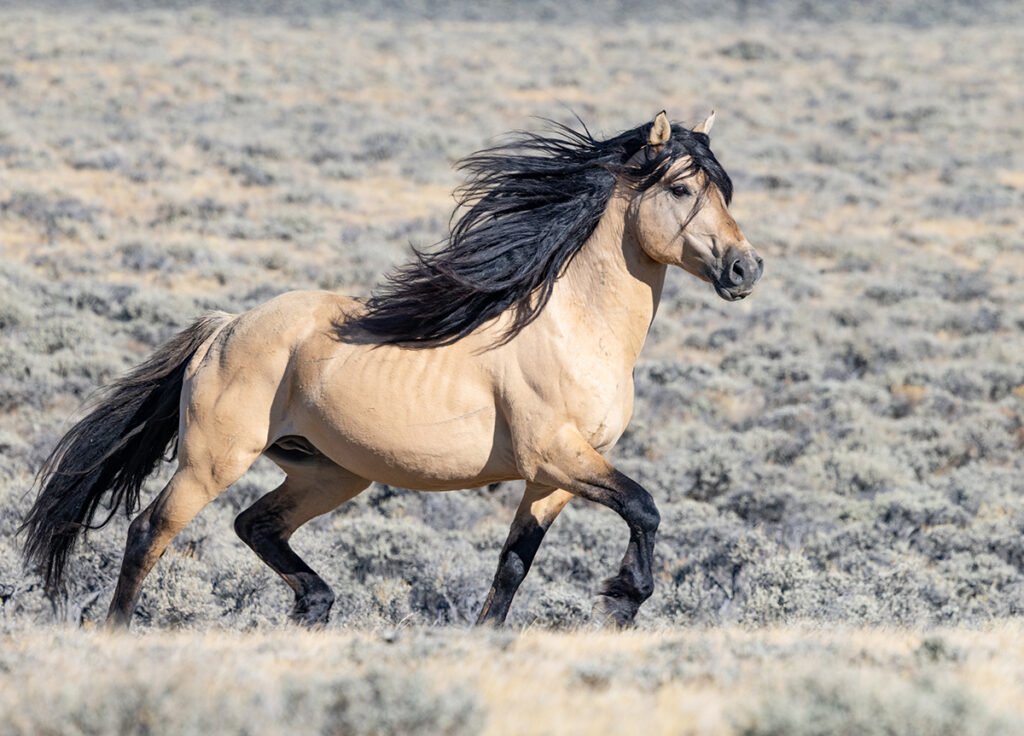
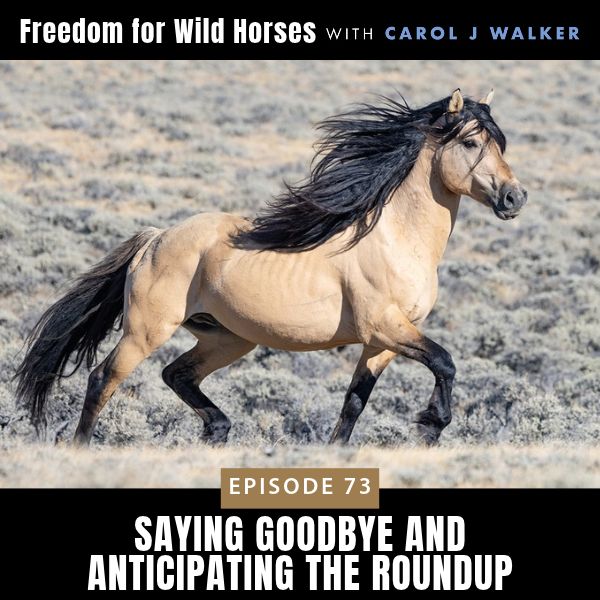
What is it like to say goodbye to wild horse families you have come to know before a roundup? In this episode, I share my recent trip to the Red Desert Complex in Wyoming, where I visited horses I have followed for years and knew I might not see again after the BLM’s planned roundup.
I revisit several families across Crooks Mountain, Green Mountain, Lost Creek, and Stewart Creek, including horses I have watched through changing families, injuries, and loss. I also share some unexpected encounters, from a new foal to a family gathering at salt licks, and the moments that made this visit especially meaningful.
The BLM is planning to remove 931 wild horses from the Red Desert Complex beginning October 15th, with 104 horses released after 50 mares are treated with Gonacon. I explain my concerns about the limited public observation planned for the roundup, why observation matters, and why I believe these horses are safest in the homes they already know.
Subscribe to my blog to get more information on how you can help America’s wild horses.
What You’ll Learn from this Episode:
- What I saw during my recent visit to the wild horse families of the Red Desert Complex.
- How wild horse families change as horses lose and gain family members.
- What happened to Fallen Star after he lost his family and suffered injuries.
- Why I believe the horses in the Red Desert Complex are not in danger of starving.
- How the BLM plans to remove 931 wild horses from the Red Desert Complex.
- Why public observation of the roundup is important for documenting the treatment and status of the horses.
- Why saying goodbye to horses I have come to know and love is one of the most difficult parts of caring about wild horses.
Listen to the Full Episode:
Featured on the Show:
- Subscribe to my blog to get more information on how you can help America’s wild horses.
- Follow along on Facebook and Instagram!
- Living Images by Carol Walker
- Follow my blog to get updates: Wild Hoofbeats Blog
- Learn more about my book, Wild Hoofbeats: America’s Vanishing Wild Horses by Carol Walker
- Information on the Roundup and Public Observation
Episodes Related to Saying Goodbye and Anticipating the Roundup:
- Ep #37: Observing a Roundup
- Ep #53: Time Spent with Wild Horses
- Ep #62: Wild Horses: Where We Are Now and Remembering Where My Journey Began
Welcome to the Freedom For Wild Horses podcast, the place to find out about wild horses in the American West and what you can do to help them stay wild and free. If you love wildlife, wild horses, and the freedom that they stand for, this show is for you. I’m your host, Carol Walker. Let’s get started.
Two weeks ago, I traveled to the Red Desert Complex in Wyoming for several days to visit the horses there that I’ve come to know over the past 10 years. The BLM had announced that the roundup was going to begin on October 15th and that 931 horses would be removed.
The Red Desert Complex consists of five herd management areas: Green Mountain, Crooks Mountain, Antelope Hills, Lost Creek, Stewart Creek, as well as one herd area in the middle, no longer managed for wild horses, Arapaho Creek.
I started in the morning, driving on Crooks Gap Road, and started looking for families that I knew. I saw Takini and his family standing and staring at oil workers near the road who were talking loudly, with one man in a white suit whinnying loudly looking at the horses. It was rather surreal. They did not look concerned, the horses, but curious as to what was going on.
This family is one of the most colorful in the complex, with Takini the stallion, a bay roan, three red pinto mares, a black pinto lead mare, Natasha, a bay roan three-year-old mare, daughter of Natasha, and four foals, two of them very loud pintos. One of the foals was brand new, maybe a week old, and her mom was keeping her a bit apart from the rest of the family. I watched for a while, and I left, hoping they would move away from the construction.
I continued driving and looking for Fallen Star, a gorgeous dun stallion with a stripe down his back and primitive markings, stripes on his legs. He had lost his family to a gray stallion two months ago, and it must have been over a course of time with several tough battles because it left him thin and with wounds on his flank. He had filled back out in the last month and healed.
When I first met him, after the terrible winter of 2022 to 2023, he had a long flowing mane, which fell out in late May of 2023. This year, it’s grown back completely, thick and long and flowing as he moves. When I spotted him from a hill through my binoculars, I looked for a two-track that would take me near him.
I started driving down the hill, and when I looked up, I saw him rearing up. The black stallion who had been dogging him earlier in the year was there, and Fallen Star chased him away. He is not lonely looking for company. No, I think he’s building strength and getting ready to get his family back.
When I made it out to a flat area where I could see him, he was still tense and amped up from his challenge. He wasn’t going to stay still and hang out, but instead he moved back and forth in front of me, striding effortlessly, mane flying. Below where he finally stood, there were cattle, lots of them, in an area in Arapaho Creek where they should have been taken off the range weeks ago. The BLM had been saying they had scheduled the roundup because of the drought and the horses were going to starve.
None of the horses in the complex that I saw or had seen over the past months were starving, not even close. And if there was a real concern about the health of the range and the lack of the forage, why on earth were there livestock even turned out at all this year? I said goodbye to Fallen Star, my heart hopeful that he might evade the helicopters in this upcoming roundup. I turned around and headed out.
On my way back to the highway, I saw that Takini had moved his family way up the hill and away from the construction and the workers. Good. After leaving them, I saw one of the families I’ve known for six years on a hill in Green Mountain, moving down to a lower area. Ohiaisa, a gorgeous Palomino, is the stallion of this wildly colorful family.
His lead mare Calypso is a stunning Pinto Bay Roan, who is very much in charge of this family. She stayed back as usual, but gorgeous Dalia, who is now pure white, kept a close eye on me the whole time I was there. She nursed her red Pinto foal and stood quietly next to him. Ohiaisa moved near her, and they stood peacefully together.
I enjoyed seeing the Palomino Pinto mare who was new to me with her cremello foal. And the bay roan mare, Cali, had a look-alike roan yearling and also a roan look-alike foal. I watched them graze and nap, and as they moved off, I told them to stay away from the helicopters.
The next morning, I looked for the horses I had come to know over many years from Stewart Creek. I was used to seeing them near the solar wells in the morning and had seen them in that area three weeks ago, but now I didn’t see any of them. No doubt because of the large number of hunters driving around and staying near the solar wells, waiting for their prey.
Another morning, I had a couple of surprising encounters that delighted me. I was driving toward Osborne Road in Lost Creek, and I saw a huge family at the water hole. I started driving toward the water hole, but they were walking away, clearly having finished their morning drink. I drove around looking for a two-track and came across some salt licks left behind by the ranchers for their cattle.
And guess what? This big family with lots of Pintos was walking in a straight long line directly towards the salt licks. I pulled my car forward out of the way and waited for them to come, standing next to my vehicle. The lead mare, a wary red pinto with a long white tangled mane, was not too sure about me, but they all kept coming, and then when they got to the salt licks, they started licking. There were two pinto colts goofing around, a black pinto mom with her look-alike young foal, two other pinto mares, and then bringing up the rear was a bay stallion with tall white socks, walking slowly and looking all around, protective of his family.
They seemed to enjoy watching me watching them, and there were small scuffles between the horses trying to get at the salt. I got the feeling this was a routine for this family. I’d never seen them before, so it was a delight to get to spend time with them. The stallion began looking to the east, and I looked to see what had caught his attention. It was another family headed to the water hole.
I left this family after saying thank you and goodbye and drove up the road to see the new family. I knew them. It was the Buckskin Pinto stallion Baldur and his red Pinto mare Phoebe and her offspring. I’ve known them for several years, and the last time I had seen them was in March. Phoebe is a gorgeous, very colorful red pinto with her oldest daughter, a Palomino Pinto, and a red Pinto yearling and a red Pinto foal. Plus, the stunning blue-eyed, striding bay stallion, Ronaldo. I first met him before the roundup in 2020, and he lost his family during the roundup. Since then, he’s been a bachelor dogging various stallions, and he’s been with this family for over a year.
There was also a Buckskin stallion trailing them. Baldur was looking older, a bit thinner, and no doubt Ronaldo was seeing an opportunity to get the family for himself. He snorted at me as he usually does, even though the family walked by me unconcerned on the way to the water hole. He stepped high, showing off, and he and the Buckskin stallion went to drink at the water hole while the girls went to the tank to drink. I watched for a while until they moved off, heading to graze.
The next morning, I went down Mineral X Road looking for the Lost Creek gang, as I called them, a loose confederation of several family bands that moved and grazed together. It had rained hard recently, and there was a large puddle on the left side of the road, perfect for horses getting water. And sure enough, there was Rincon and his family nearby.
Rincon is a short but stocky red Pinto stallion who’s always on alert and watching carefully. He has a gorgeous Grulla mare, a gray mare, and now a new black mare and foal. They were looking over my head like someone else was coming, and I was delighted to see my favorite family on the way, Storm and Donata’s family.
Donata is the daughter of Looking Glass, the amazing leopard Appaloosa stallion. He stole Grace, a gorgeous Palomino Pinto mare, from Storm six years ago, and their first foal was Donata, a Buckskin blanket Appaloosa. Now, Donata and her younger sister, Quinn, who’s a Buckskin, are with Storm. Donata has a yearling Appaloosa colt, Connor, who’s a bay blanket Appaloosa, and this year, Rowan was born. He’s mostly white with Palomino markings and Palomino spots, a truly gorgeous little colt. He still sticks pretty close to mom.
They walked down toward Rincon’s family and then stopped to stand for a while. I sat down to watch. First, Rowan lay down for his mid-morning nap. Then Rincon’s gray mare kept getting closer and closer to me, very curious. Then Rincon relaxed and walked by me. Soon, Donata walked over to Rowan, and to my surprise and pleasure, lay down next to him.
Foals always lie down to sleep, but adult horses only lie down when they feel safe. I felt honored. Storm and Connor walked by, and then Quinn. Storm finally went back over to Donata and Rowan and got them up. They watched me for a while, and I said my goodbyes in case I would not see them again. Then both families moved off to graze, and I kept driving.
When I looked down Riner Road, I spotted another group with a bay stallion’s mostly bay family, and there was Looking Glass and his new family, with the beefy gray stallion Sheamus and Anya, his gray lead mare and her foal. Last year, Sheamus had a large family, and Looking Glass was his lieutenant. Looking Glass had lost his own family two years before. But now, he was the lieutenant, and his job was to keep the family together and drive off other stallions. He became part of the family, but this spring, he started slowly moving the gorgeous liver chestnut mare, Shannon, and her yearling colt and foal further and further away from Sheamus. And in August, he was their band stallion. Sheamus lost two other mares as well, one to the black.
Looking Glass was alert and watching, while Shannon, who’s normally quite shy, came toward me so I could see her beautiful face. It was a special moment with these horses who I hope can continue to live out their lives wild and free instead of being rounded up with helicopters and losing the only home they’ve ever known.
The BLM is planning to round up 1,035 wild horses in the Red Desert Complex starting October 15th, removing 931 of them and releasing 104, 50 of them mares to be treated with Gonacon, which is a known sterilant. They’re calling it birth control.
They are only planning to let the public observe the roundup for four days, even though it will likely go on for two to three weeks. And this is a complete departure from past roundups where the public has always been allowed to observe the whole roundup. I have been observing roundups in Wyoming since 2005 and have always been allowed to watch every day of the roundup, weather permitting.
Public observation is very important because the contractors always treat the horses better when someone is watching, standing for the horses. And also, the observers can find out information about where the horses are going, what has happened, injuries, accidents, and deaths. The horses that are removed will be shipped to the BLM facility in Rock Springs.
There’s no way to know which horses will be removed right now. I know none of them should be removed. The herds are still recovering from the devastating loss of life from the brutal winter of 2022 to 2023. Wild horses are always safest in their homes, and they are not in danger of starving to death. If they will allow observation, I will be out there documenting the roundup and will be reporting on the status of the horses. This is the most difficult part of coming to care for and love these horses.
Thank you for listening to this episode of Freedom for Wild Horses.
Thank you for listening to this episode of Freedom for Wild Horses. If you want to learn more, follow me at www.wildhoofbeats.com for more information and for ways to help America’s wild horses. See you next time.
Enjoy the Show?
- Don’t miss an episode, follow the podcast on Apple Podcasts, Spotify or RSS.
- Leave us a review in Apple Podcasts.