
Ep #70: Wild Horses: What’s Real and What’s True
July 20, 2026The Destructive and False Propaganda in the BLM’s Plan to Roundup the Red Desert Complex Wild Horses
August 23, 2026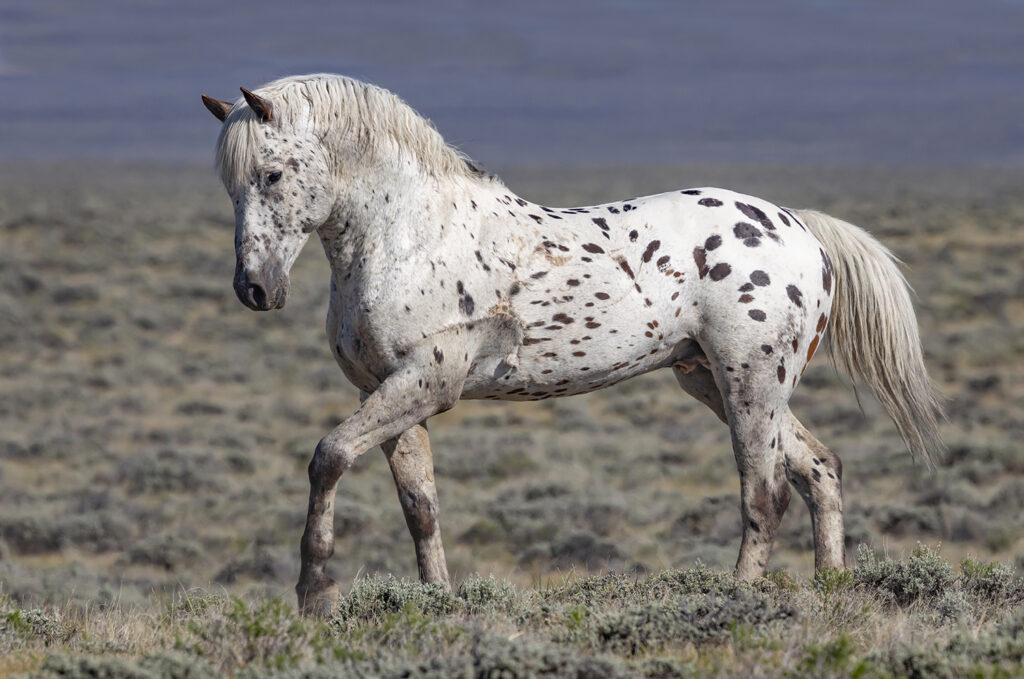
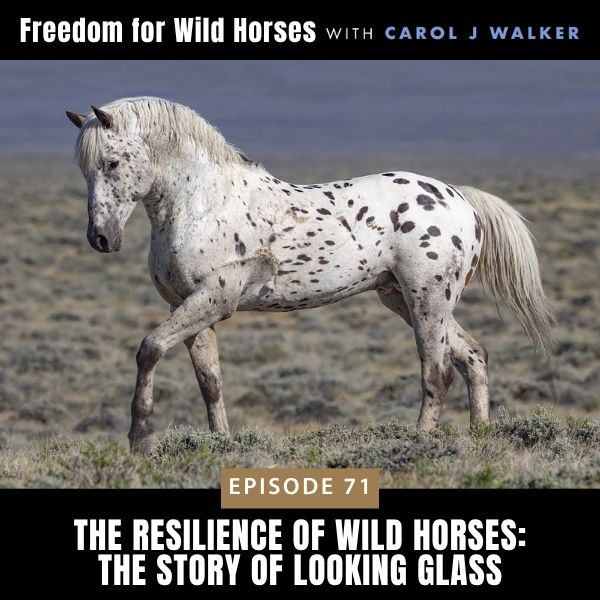
What does it take for a wild horse to survive when everything around him changes? In this episode, I share the story of Looking Glass, a leopard Appaloosa stallion I first encountered in the Lost Creek Herd Management Area and have followed for years through changing families, harsh weather, injuries, and loss.
Looking Glass survived the devastating winter of 2022 to 2023, when I believe roughly half of the wild horses remaining in the Red Desert Complex did not survive. I followed his journey as he lost his family, found new companions, recovered from a serious wound, and eventually established a family of his own.
The Red Desert Complex is now at risk of another major roundup. The BLM’s environmental assessment calls for removing 1,800 or more wild horses from the area, and Looking Glass and the other horses have no way of knowing which animals will remain free. Their ability to adapt and continue living in these wild lands is a powerful reminder of why they belong here.
Subscribe to my blog to get more information on how you can help America’s wild horses.
What You’ll Learn from this Episode:
- How Looking Glass first established his family in the Lost Creek Herd Management Area.
- What happened to Looking Glass and his family during a devastating winter.
- How Looking Glass adapted after losing his family and later became part of another family.
- How he recovered from a serious wound and eventually established a family of his own.
- The ways wild horse families change as horses lose and gain family members.
- What the BLM’s environmental assessment means for the Lost Creek Herd and the Red Desert Complex.
- Why the planned removal of 1,800 or more wild horses could affect these horses and their ability to remain free.
Listen to the Full Episode:
Featured on the Show:
- Subscribe to my blog to get more information on how you can help America’s wild horses.
- Follow along on Facebook and Instagram!
- Living Images by Carol Walker
- Follow my blog to get updates: Wild Hoofbeats Blog
- Learn more about my book, Wild Hoofbeats: America’s Vanishing Wild Horses by Carol Walker
Episodes Related to The Resilience of Wild Horses:
- Ep #43: Looking Glass the Wild Leopard Appaloosa Stallion
- Ep #53: Time Spent with Wild Horses
- Ep #70: Wild Horses: What’s Real and What’s True
Welcome to the Freedom For Wild Horses podcast, the place to find out about wild horses in the American West and what you can do to help them stay wild and free. If you love wildlife, wild horses, and the freedom that they stand for, this show is for you. I’m your host, Carol Walker. Let’s get started.
I met the wild stallion Looking Glass for the first time unexpectedly. I was traveling north on Crook’s Gap Road in the Lost Creek Herd Management Area early in the morning, and I saw a large family of wild horses, all sorrels, except for the gray stallion, who was almost entirely white, marking him as an older horse. He was moving them along, and suddenly, right near my vehicle, a young bachelor stallion crossed the road, his eyes on the family band. He was a gorgeous leopard Appaloosa, meaning his base coat was very light in color, and he had dark brown spots all over his face and body. I am a complete sucker for Appaloosas, and they are rare in the wild.
I had only ever seen them in Stewart Creek, another herd area in the Red Desert Complex, and I had never seen a leopard Appaloosa in the complex. He was intent on the mares and did not even look at me as he walked by, but I was enchanted nonetheless. His eyes were big and brown, and his tail was sparse, typical for an Appy. His neck was not developed, marking him as a young stallion. He was clearly intent upon winning a mare, but I wondered if he would have any luck against the bigger and more experienced stallion. The whole family moved away, with Looking Glass trailing after them.
The next time I saw Looking Glass, the following summer, he had indeed won a mare and her foal, a black mare and her bay foal. He was very attentive to them, but at the same time, relaxed and laid back. That’s his personality. I would often see him on my way out to other areas and would stop and watch him.
One morning, as the sun rose, I got to see him outlined by the sunrise, then running to join his family. That same year, I kept seeing him near another family, the gray stallion Storm’s family, with all his extremely colorful pintos. I would occasionally see the two stallions spar or Storm chase Looking Glass, but it was never serious. They each seemed to enjoy having the company of the other family nearby.
The next year, 2020, in the spring, I was delighted to see that he had added to his family, having stolen Grace, a gorgeous Palomino Pinto mare, from Storm’s band, and another black mare. Grace had become his lead mare, and I could not wait to see if she had a spotted foal the following year. In the meantime, the BLM announced their plans to remove over 2,000 wild horses from the Red Desert Complex starting in October. I was very concerned about all the horses in the complex, including Looking Glass and his family.
As it turned out, although I was observing most of the roundup, I was not there on the bitterly cold day in November when they rounded up the Lost Creek horses. I heard from a friend with great relief that although the helicopter flew over Looking Glass’s family, he would not budge, and they did not capture them.
I did not find Looking Glass and his family in the spring, but in late summer, I was thrilled to find a tiny Appaloosa filly, just days old, at Grace’s side. She was a buckskin with an Appaloosa blanket of spots on her rump, and Grace was very protective of her. When Looking Glass approached to look at his new daughter, Grace pinned her ears and chased him away. I spent an hour with the family that morning watching Donata get used to her long legs and sticking close to her mother as she observed the world and her family.
In October, I got to watch Donata in her first snow. She got a little grumpy with the cold, bucking and protesting to her mother, who ignored her antics. I said goodbye to them after spending the morning with them, knowing that I would not see them again until next year and hoping that they would be well over the winter. I knew that it was likely that Looking Glass would have bred Grace during her week of foal heat after giving birth, so I made an extra effort to find them in July of 2021, which would be about 11 months after Donata was born.
Sure enough, Grace had a new foal by her side when I followed them to a water hole. It was a buckskin filly that I named Quinn. She did not have spots, but she was gorgeous and curious about everything. Big sister Donata was protective of Quinn, and they were inseparable. Every time I saw Looking Glass and his family over the last couple of years, I also saw Storm and his family nearby, as well as Seamus and his family. Seamus is a big, beefy dapple gray stallion with a gorgeous white lead mare, Anya, and several other mares and their offspring, including an elegant, dark liver chestnut mare. There were other families that would sometimes be close, but these three were most consistently together.
When winter came in 2022, no one was expecting how incredibly bad it would get. Snow started falling in December, and it did not let up until the end of April. I could not get into the range to see how the horses were doing. The snow drifts were too deep even on the roads.
In February, I was offered a seat on a plane to fly over the area, which I eagerly accepted. An ocean of snow spread out in front of me as we flew over Crook’s Gap Road, past Crook’s Mountain, and over Arapaho Creek. There were waves on the snow from the wind. We saw several families of wild horses traveling but did not see what they were eating. We could not get over to Green Mountain because the turbulence was so bad, but we saw some horses over there at a distance. As it turns out, some of the drifts had gotten to be over 16 feet high.
Horses who had not experienced a winter like this in their lifetimes did not know where to go and became trapped and eventually starved with their families around them. It was a truly grim sight in May once I was finally able to drive into the area. Friends and I estimated that half of the wild horses that remained in the Red Desert Complex after the roundup did not make it through the winter. As the last of the snows melted, I was on a frantic journey to see if the horses I knew had survived. Many had not. I had no luck finding Looking Glass and his family and was extremely concerned that he and his family might have perished.
I was very relieved to see photos on Facebook from a photographer of Looking Glass and his family taken a week ago. Looking Glass was incredibly thin. Grace was very thin, but she had kept Quinn and Donata alive. The other two mares were thin as well, but the good news about all that snow was that the grass was coming up fast and thick because of all the moisture. They would have time and forage to recover. It was the worst winter since 1973, and Looking Glass and his family had survived.
Later in the summer of 2023, I found Looking Glass, but his family was gone. He was trotting after a nervous bay mare with a tiny foal. She was worried about anyone getting close to them, and Looking Glass patiently followed her. I was only able to watch them through my binoculars. He was not injured, but Storm, who had also lost his family, had a huge chunk of hide torn off his flank. It was an ugly wound, but it did not seem to be slowing him down. Later in the fall, I was happy to see that Storm was healing up, and Looking Glass’s new mare had relaxed and was content to stay with her foal and Looking Glass. The day I found them, she was dozing on her feet, standing near her sleeping foal.
Looking Glass was grazing casually by Seamus’s band. This is a typical behavior of wild horses I have noticed, that it’s like, I’m innocent, I’m just grazing, I’m not doing anything. But he was clearly looking up from time to time at Seamus’s mares, no doubt hoping he could make off with one or two of them. I wondered what had happened to Grace and Donata and Quinn and the other two mares, and if they were together. I drove down many roads in Lost Creek looking for them but did not have any luck finding them.
The following spring, I was finally able to find Donata, Quinn, and Grace. They were with Storm. Grace had a new foal, a shy bay blanket Appaloosa with loud spots all the way to his withers. His name is Tyler. They seemed content with Storm, which made sense since Grace had originally been with Storm.
I had no luck finding Looking Glass until the fall. I was looking through my binoculars when I saw a group of horses, and his coat was unmistakable. It was Looking Glass, and he stood head lowered, and I could see a gash down his side and blood on it. I immediately tried to drive closer so that I could get a better look, but there were no two-tracks that would get me anywhere near him, and the tall sagebrush would make walking that far extremely difficult. In the horse ranges on public land, vehicles must stay on two-tracks or on the road and not drive off-road. So I watched him for a while, glad at least that there were other horses nearby, and left the area with a heavy heart, hoping that he would be okay. There was no sign of the bay mare and her foal.
The next spring, I found Storm’s family. Donata was heavy with foal, her first, and Quinn had a small bay colt already by her side. Grace was gone, and it was just her offspring that were still with Storm. I was surprised to find Looking Glass with Seamus’s family. His wound had healed, leaving a long, jagged scar down his side. I couldn’t tell at first if he was dogging the family or acting as a lieutenant, but when I saw them later that summer, Seamus seemed to be accepting him in the middle of his large family, letting him drive off other stallions and making sure everyone stayed together. Looking Glass had no hope of beating Seamus in a fight. He was much smaller and not nearly as dominant, so this seemed to be a good way for him to be part of a family. I wondered how long this would last.
In the meantime, Donata had foaled, a beautiful bay blanket Appaloosa colt I named Connor. Donata was a very good first-time mother, caring for her foal but letting him explore his new world. I did see Grace briefly through my binoculars with another family I was not familiar with and was glad to see her. In the spring of this year, when I found Seamus’s band, I could tell that the situation was changing. Looking Glass was staying on the outskirts of the family with the gorgeous dark liver chestnut mare and her three offspring. They were still part of Seamus’s family, but a bit off to the side.
When I found them again in the summer, Looking Glass had clearly separated the mare and her two-year-old, yearling, and foal from Seamus’s family. They were still traveling near each other, but there was a difference. This was Looking Glass’s family now. They looked to him for security and guidance, and he was quick to spar with other stallions who got too close. There were no spotted foals yet, but perhaps they will come next year.
Looking Glass was again a grandfather. Donata had her second foal, a gorgeous Palomino leopard Appaloosa colt that I named Rowan. He stuck close to Donata’s side and played with his big brother, Connor. His color reminded me of Grace, his grandmother, but the spots were all Looking Glass.
With the environmental assessment from the BLM that dropped this June, the Lost Creek Herd and all of the herds in the Red Desert Complex are at risk of being rounded up and a majority of the horses removed. The BLM said their plans were to do the helicopter roundup either in October of this year or in July of 2027, removing 1,800 or more wild horses as the target goal.
With 65,000 wild horses already in holding facilities and the Wild Horse and Burro Program staff greatly reduced, it seemed to be an even more terrible time than usual to be rounding up and removing wild horses from our public lands where they belong. And there is no way to predict, if they do proceed with a roundup, which horses will be removed and which will remain free, but these horses are survivors. They adapt to weather, to losing family members, and they continue on and thrive in these wild lands like Looking Glass, the iconic Appaloosa stallion. May he always run free. Thank you for listening to this episode of Freedom for Wild Horses.
Thank you for listening to this episode of Freedom for Wild Horses. If you want to learn more, follow me at www.wildhoofbeats.com for more information and for ways to help America’s wild horses. See you next time.
Enjoy the Show?
- Don’t miss an episode, follow the podcast on Apple Podcasts, Spotify or RSS.
- Leave us a review in Apple Podcasts.
2 Comments
As another lover of Apps – is Looking Glass still “out there?
I know WHE has been bringing suits against BLM regarding the CAWP “policy” and has managed to stop at least one of the future roundups.
Loved reading about Looking Glass – as far as I’m concerned -what a beautiful boy.
Hi Maggie,
I saw Looking Glass 3 weeks ago. He and his family are still free but the BLM is planning a roundup of the whole Red Desert Complex starting in October.