
Comments Needed for BLM’s Wild Horse Removal Plans for the Red Desert Complex in Wyoming
July 8, 2026
Ep #71: The Resilience of Wild Horses: The Story of Looking Glass
August 17, 2026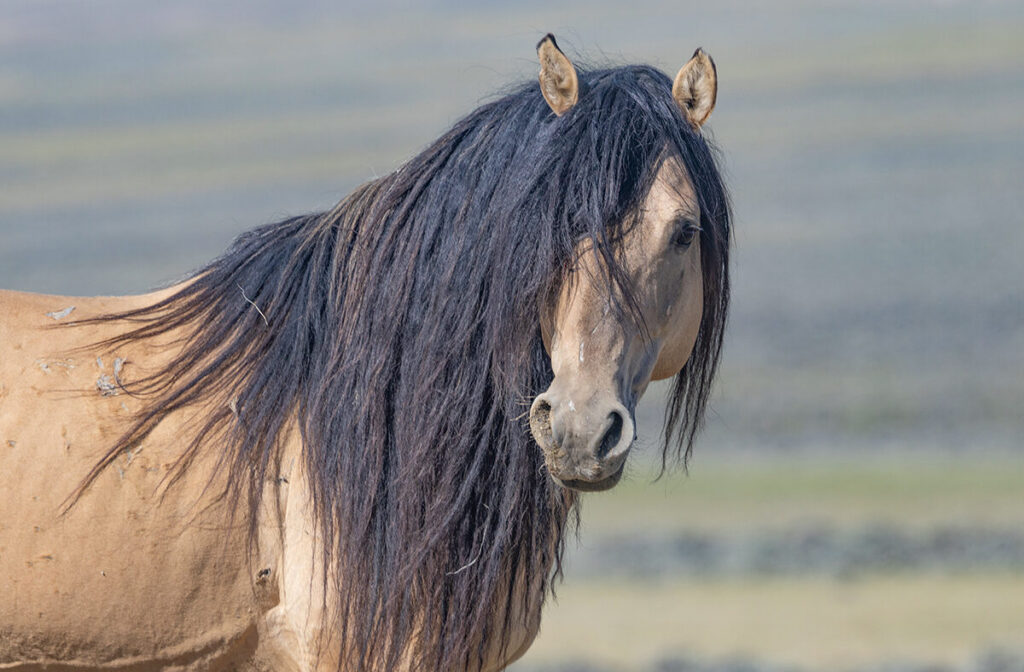
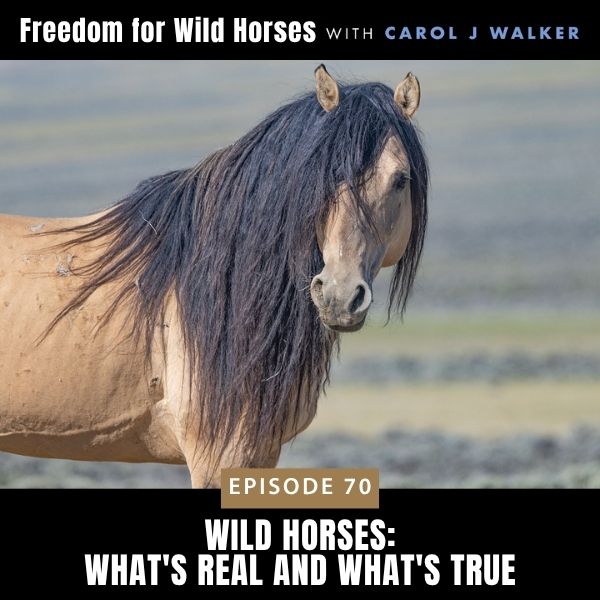
What makes wild horses worth fighting for? In this episode, I reflect on why I continue to advocate for wild horses. They are valuable not for what they symbolize but for who they are as sentient beings living on public lands. I share stories from recent trips to the Salt Wells Creek and Red Desert Complex herds in Wyoming, observing their families, foals, and the challenges they face.
I describe the experiences that have had the greatest impact on me, including witnessing foals being comforted by mares other than their own and tracking stallions recovering from harsh winters. These encounters highlight both the resilience of the horses and the uncertainty they face when environmental pressures and planned roundups can change everything in a moment.
This episode also addresses the ongoing threat of BLM management decisions. With environmental assessments out for public comment and roundups scheduled in the Red Desert Complex, no horses in these herds are fully safe. I explain why these wild horses deserve to remain in their homes, living freely with their families, and why it is so important to continue advocating for their protection.
Subscribe to my blog to get more information on how you can help America’s wild horses.
What You’ll Learn from this Episode:
- Why wild horses are valuable as sentient beings not just symbols.
- How wild horse families care for foals and maintain social bonds.
- The impact of harsh winters on stallions and herd dynamics.
- How environmental assessments and planned roundups affect herd safety.
- Why observing wild horses in their natural habitat is critical for understanding their needs.
- What actions can support continued protection and advocacy for these horses.
- How ongoing litigation and public awareness play a role in wild horse management.
Listen to the Full Episode:
Featured on the Show:
- Subscribe to my blog to get more information on how you can help America’s wild horses.
- Follow along on Facebook and Instagram!
- Living Images by Carol Walker
- Follow my blog to get updates: Wild Hoofbeats Blog
- Learn more about my book, Wild Hoofbeats: America’s Vanishing Wild Horses by Carol Walker
Episodes Related to Wild Horses:
- Ep #65: A Year for Wild Horses
- Ep #68: Closing in on Wild Horses
- Ep #69: Interview with Manda Kalimian of Rewilding American Now: Petition to Audit BLM’s Wild Horse Sale Program
Welcome to the Freedom For Wild Horses podcast, the place to find out about wild horses in the American West and what you can do to help them stay wild and free. If you love wildlife, wild horses, and the freedom that they stand for, this show is for you. I’m your host, Carol Walker. Let’s get started.
I’ve never been a person who goes on and on about how wild horses are our heritage, a living symbol of freedom, helps settle our country, or are the embodiment of the American spirit. These things may be true, but they are more about the wild horse as a thing, an object, a symbol. Not a living, breathing being with a heart and a soul and a life on our public lands.
Wild horses are valuable to me, not because of what they represent, but because of who they are: sentient beings whose lives touch mine every time I am with them. Spending time with wild horses is the greatest gift I have ever been given in this lifetime. Getting to know individuals and their families is a joy. Being wild is glorious, but there are no guarantees. Sometimes it breaks my heart when horses I have grown to know and love become injured and or lose their lives. But it’s always worth the pain.
I’m going to share with you two stories of wild horses that had a profound impact on me last month. I was in Salt Wells Creek, Wyoming. This is one of the checkerboard herds in Wyoming that we have a lawsuit against the BLM and their plans to zero out this herd. We were told that because of the continuing litigation, BLM has suspended their plans to zero out this herd until summer of 2027 at the earliest.
I had been there for three days, and on this morning, I saw four family bands walking in a line with purpose up on a hill. That almost always means they are on their way to water. There were several small foals in the group, and the mothers nursing these foals need more water than the other horses, so they were very motivated to get a drink in the morning.
As I got closer, I recognized one of my favorite families. This used to be the wild curly stallion Bobby’s family. Bobby is one of the oldest wild stallions in Salt Wells Creek, around 30 years old, and he lost his family this last winter to Sherman, a big, curly sorrel stallion whose calm demeanor seems to be a comfort to his new family.
Black curly colt Tristan, who looks just like his dad, Bobby, has not been kicked out yet, but since he’s two this year, I have no doubt it’ll be soon. It was great seeing the gorgeous curly Palomino filly of Mysterious that I named Gwyneth on my last trip. She has grown and was very spunky as she ran down the hill with her family. The surprise I got was seeing the Palomino Pinto filly Suri, who was born last May to a golden Palomino mare. She was leggy and tall, and at her side was a black foal, a filly. They were inseparable. They stayed close together at all times as they ran down the hill, as the family drank, and after, as they stood together resting.
I even saw the black filly nursing Suri several times, but that’s impossible. Suri was only a year old, far too young to have a foal. I saw the filly nursing, and there was no other mare in the family that the filly belonged to. She was comfort nursing, getting emotional security but not nutrition from Suri. I found out from a friend that Mina’s mother was the same golden Palomino mare who was Suri’s mom, but now that mare had disappeared and was nowhere to be found. Something must have happened to her because she had been a wonderful and devoted mother to Suri. She never would have left her foal behind.
So Suri, her big sister, has taken on the role of foster mom, protecting her and comforting her as she grows. Mina looked in good condition, not thin, and she was vital and spirited, so she’s old enough to be able to get her nutrition from grazing to survive. I had heard of mares taking in a foal who was not theirs to care for, but never a yearling. Suri is an extraordinary filly and will be an amazing mother to her own foals someday, I am sure.
My other story from my trip last month takes place in the Red Desert Complex in Wyoming, in the Arapaho Creek herd area. After the devastating winter of 2022 to 2023, when so many wild horses perished, I have gotten to know an extraordinary wild stallion. He’s a bay dun with a yellowish tan coat. He has a dark stripe down his back and has primitive markings or stripes on his legs, and he has a luxurious black mane and tail. Or at least he did when I first saw him in May 2023. Shortly after that, his mane fell out. This was likely caused by the malnutrition that the horses that survived that winter suffered.
A friend of mine told me his name was Fallen Star, and I thought that suited him. Every time I traveled to the Red Desert Complex, I looked for him and watched his family grow, as well as his mane. He was calm and steady with his mares, and when I approached them to spend time with them, he was tolerant of my presence. I would get to a certain distance and sit down, and the mares would relax and watch me, and he would keep an eye on me, but it was a peaceful time.
Last month, days before I arrived in the area, I saw a photo of Fallen Star, thin, wounded, and alone. Another stallion had taken his family. I was determined to find them and see how he was doing. In the early morning, I drove into an area I would often find him in and saw his mares and their foals with a gray stallion with a short tail. He was keeping them closely together, different than the relaxed, spread-out band I was used to seeing with Fallen Star.
I continued down the road and kept stopping to glass over the land with my binoculars. Finally, I saw him, and with him was his daughter Kamala and a foal. I drove slowly to a point down the hill from where they were resting. The foal was sleeping flat out, and Kamala was standing over her. I remember when Kamala was born. She’s a gorgeous dun who looks just like her father, primitive markings and all, and motherhood suits her. She’d filled out and looked healthy and content.
As I walked slowly closer, I could see that Fallen Star was thin, and he had two wounds on his flank that were ugly but did not look life-threatening. There were also scars on his usually pristine coat, but he looked just as regal and as beautiful as ever, and his mane was longer and fuller than I’d seen last year in the fall. He and Kamala were not concerned about my presence as I sat down to spend time with them. Fallen Star did keep looking over his shoulder toward the area where the gray stallion and his family were, probably a mile or two away. He knew where they were, even though he could not see them.
I wondered how Kamala and her filly had managed to join him. Did they sneak off in the night? Had he made a desperate run and chased them away from the rest of the family and the gray stallion? These are questions I cannot answer.
Eventually, the filly woke up from her nap, and she’s a dun as well, lighter in color than her mother. She nursed and looked around, watching me for a while. Then Kamala started moving down the hill to an area to graze, Fallen Star walking behind them until he threw his head up on alert. He had heard something and charged down the hill with that gorgeous mane billowing in full protection mode. Kamala and her filly ran as well, veering slightly to the right. Finally, Fallen Star stopped running and became more relaxed, moving with Kamala and her foal to a grassy area to graze.
I said goodbye to them and headed back down the road, looking forward to our next encounter. Wild horse families change, grow, shrink, and nothing, not even life, is assured. The BLM has the Red Desert Complex under scrutiny with an environmental assessment out for public comment and a roundup scheduled for either October of this year or July of 2027. None of the horses in these herds are safe. And yet they belong here in the high desert lands in Wyoming. They should stay here and live out their lives with their families under the big open sky.
I will keep fighting for them because they are horses who are individuals, valuable in and of themselves, and they deserve to live free. Thank you for listening to this episode of Freedom for Wild Horses.
Thank you for listening to this episode of Freedom for Wild Horses. If you want to learn more, follow me at www.wildhoofbeats.com for more information and for ways to help America’s wild horses. See you next time.
Enjoy the Show?
- Don’t miss an episode, follow the podcast on Apple Podcasts, Spotify or RSS.
- Leave us a review in Apple Podcasts.
1 Comment
Thank you for sharing they life as wild horses
Hope they are still